Abiverd
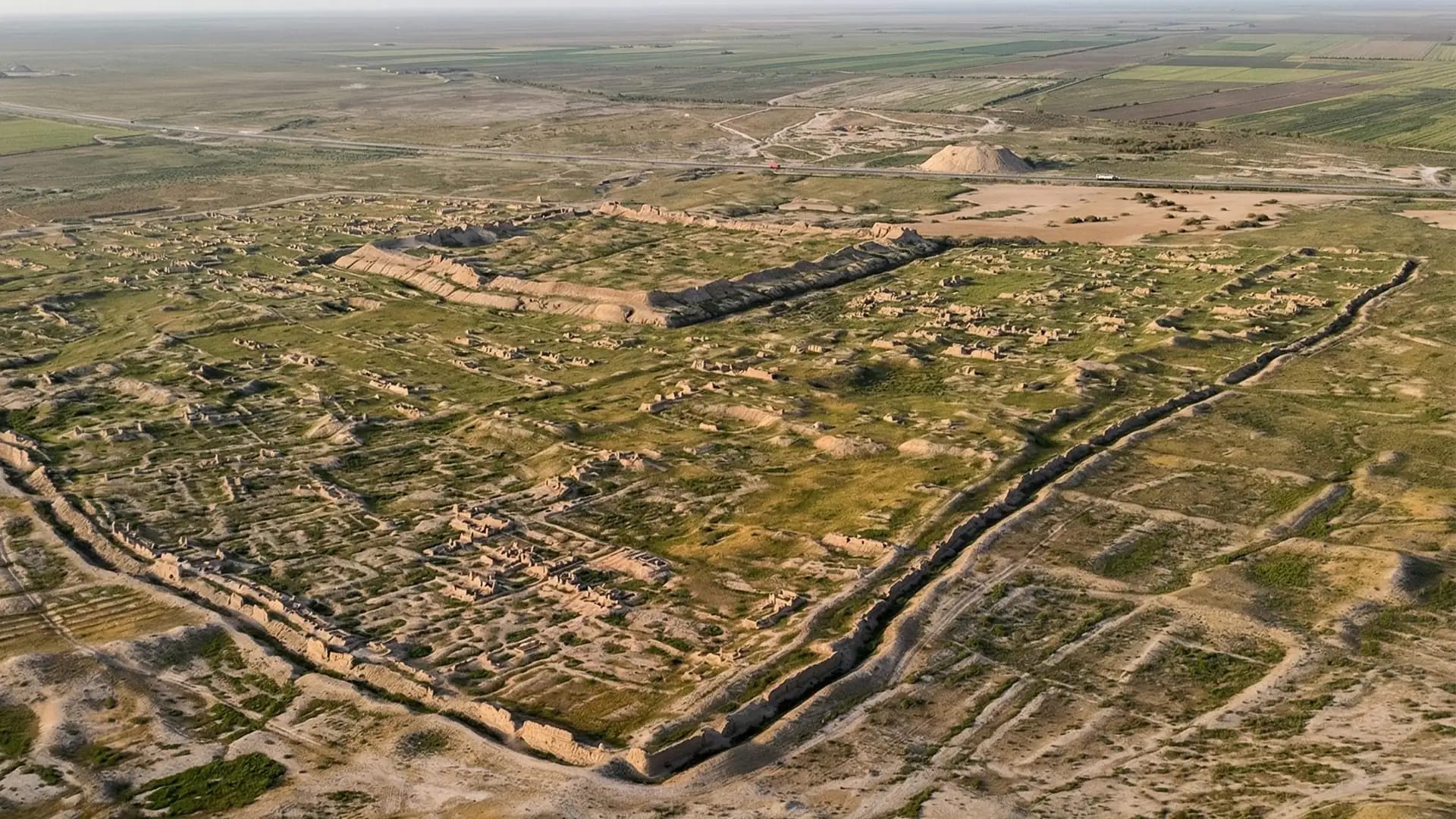
A ruined medieval Silk Road city between Ashgabat and Mary, where crumbling mud-brick walls and a fortress mound preserve the outline of a once-prosperous trading center.
Quick Navigation
Overview
The city's rise was tied to the broader prosperity of the pre-Mongol medieval world in Central Asia. Like most of its neighbors, Abiverd was devastated by the Mongol invasions of the 13th century - a catastrophe that reset the urban map of the region so comprehensively that many cities simply never recovered. Abiverd was one of them. What you see today is the archaeological ghost of a city that once had mosques, markets, and thousands of inhabitants moving through its streets.
The site is largely unexcavated compared to the more famous Silk Road ruins of Merv and Konye-Urgench, which means it retains a raw, unmediated quality that more developed heritage sites sometimes lose. Earthen ramparts, the raised citadel, and scattered ceramic fragments underfoot tell the story without the benefit of signage. For visitors who want to engage with a ruin rather than observe one, Abiverd rewards that instinct.
There is also something fitting about Abiverd's position on the route between Ashgabat and Merv - it sits precisely where a traveler's mind begins to drift toward the ancient, the landscape opens flat and wide, and the scale of what the medieval Silk Road actually was starts to feel legible. The road itself never stopped moving. Abiverd simply ran out of time to keep up.
Highlights
Why Visit
- Walk the earthen ramparts of a medieval Silk Road city that most visitors to Turkmenistan never reach
- Experience ruins that feel genuinely raw - no signage, no crowds, no barriers between you and history
- Understand the human scale of the Silk Road through a city that thrived and was lost in the same era
- Combine with the Merv UNESCO site for a full medieval Khorasan itinerary in a single day
- Photograph an ancient citadel mound rising from the flat Ahal plain - a view unchanged for centuries
Best Time to Visit
March through May is the most rewarding time to visit Abiverd, when the surrounding plains carry some greenery and temperatures are comfortable for walking the site - typically between 15-25°C (59-77°F). September and October offer similarly good conditions with clear skies and cooler air. Summer visits are possible but the open, shadeless site becomes uncomfortably hot from late June onward, with temperatures regularly exceeding 38°C (100°F). Winter is cool and quiet, with occasional rain that can make the earthen paths slippery.
Getting There
Abiverd is located in Ahal velayat, along the main highway connecting Ashgabat to Mary - making it a natural stop on the overland route between the capital and the Merv archaeological complex. The site is approximately 100 km from Ashgabat, about an hour to an hour and a half by car. Our tours combine Abiverd with the Merv UNESCO ruins as part of a multi-day Silk Road itinerary, with transport and guiding arranged throughout.
Tours Featuring Abiverd
Quick Navigation
Plan Your Visit
Let our travel experts help you plan the perfect visit to this destination.
Inquire NowReady to Plan Your Journey?
Let our travel experts craft your perfect Turkmenistan adventure.
Chat with a Trip Expert