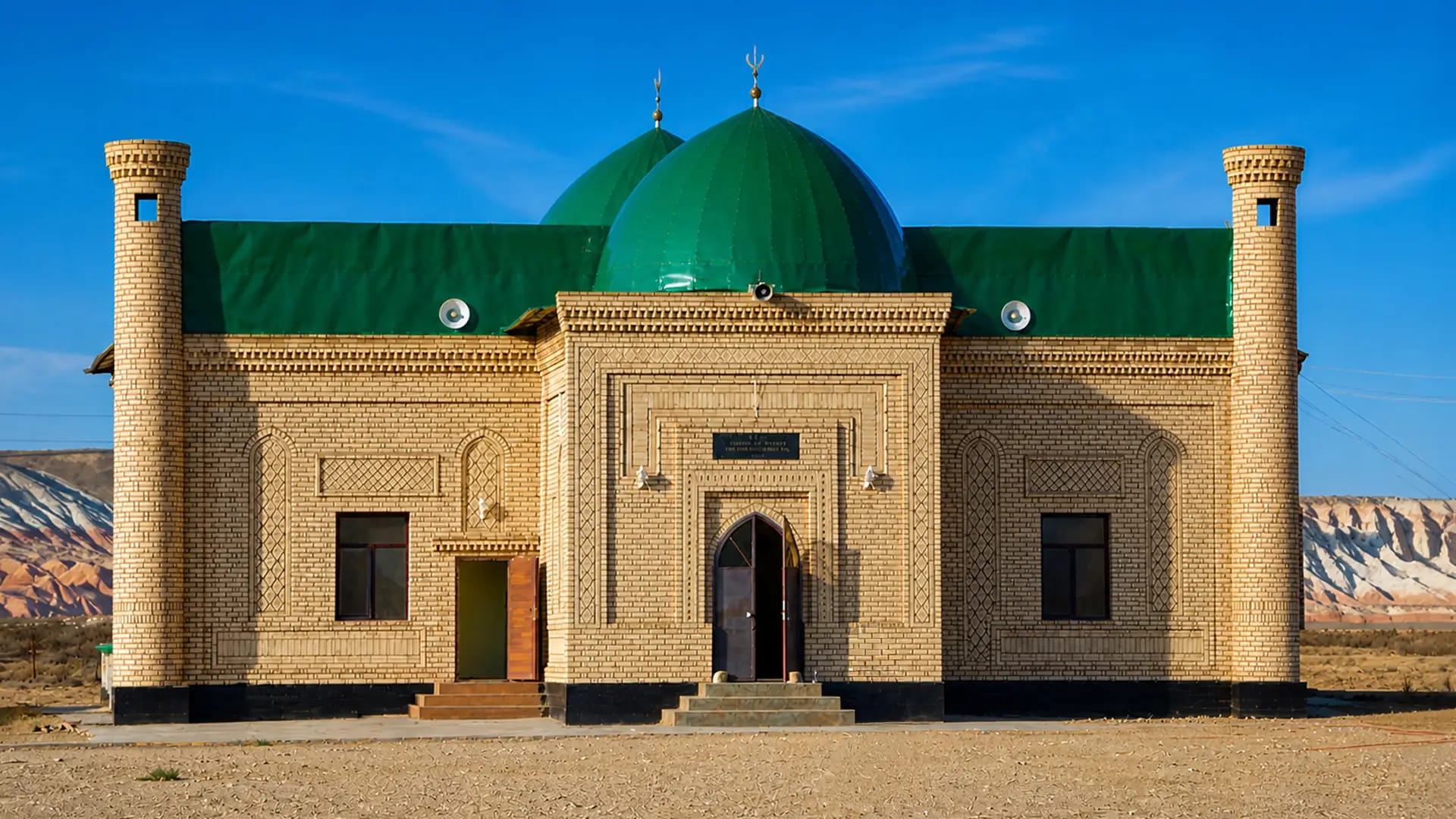
Gozli-Ata Mausoleum
A sacred Sufi mausoleum on the remote Ustyurt Plateau in Balkan velayat, dedicated to a revered 14th-century mystic and drawing pilgrims across generations.
Quick Navigation
Overview
The Ustyurt Plateau is one of Central Asia's great geographic peculiarities: a vast elevated tableland that rises abruptly from the surrounding lowlands, its white and ochre cliffs dropping hundreds of meters to the Caspian Depression in the west. Gozli-Ata - whose name translates roughly as "Father Who Sees" or "Watchful Elder" - chose this dramatic terrain deliberately. Sufi tradition placed enormous significance on withdrawal, on the kind of clarity that only arrives at altitude, at distance from settled life. The landscape around the mausoleum still feels like a place someone chose for contemplation rather than convenience.
The mausoleum complex includes a domed tomb structure and associated architectural elements that have been maintained and in parts rebuilt over the centuries. Pilgrims arrive especially during the spring months, making their way across the plateau to seek intercession and blessing at the tomb. The site has never been purely archaeological - it functions as a living religious destination, and the atmosphere reflects this. Votive offerings, fabric tied to posts, the low sound of prayer. The medieval and the present tense occupy the same space without either displacing the other.
The plateau setting means the views from the site extend over extraordinary distances. On a clear day, the white cliff edge of the Ustyurt drops away dramatically to the west, and the horizon carries the faint metallic gleam of the Caspian. It is the kind of view that explains why plateau-edge locations were chosen for sacred purposes across many cultures - there is something about looking that far that encourages the vertical.
The journey to Gozli-Ata crosses terrain that rewards patience. The plateau road is rough, the landscape stark, and the destination arrives without fanfare. But the combined effect - the isolation, the clean white architecture against limestone, the distant sea - delivers exactly the kind of encounter that is impossible to curate and difficult to forget.
Highlights
Why Visit
- Visit one of Turkmenistan's most remote and spiritually significant Sufi pilgrimage sites
- Stand on the Ustyurt Plateau edge with views stretching to the Caspian Sea
- Witness living pilgrimage culture at a site that has drawn the faithful for over six centuries
- Experience a mausoleum that functions as active sacred space, not a preserved monument
- Combine plateau scenery, geological drama, and Islamic heritage in a single remarkable destination
Best Time to Visit
April through June is the prime visiting period, when plateau temperatures are mild and spring light gives the white limestone an almost luminous quality. The pilgrimage season peaks in spring, so visiting in April or May means encountering the site at its most active. Summer brings intense heat and fierce winds on the exposed plateau. September and October offer a second window of comfortable conditions before autumn cold sets in.
Getting There
Gozli-Ata is located on the Ustyurt Plateau in Balkan velayat, a significant distance from Ashgabat via the western corridor of Turkmenistan. The approach road crosses rugged plateau terrain and a 4WD vehicle is essential. Our tours to the Ustyurt region include the mausoleum as part of a multi-day western Turkmenistan itinerary, with all transport and permits arranged.
Quick Navigation
Plan Your Visit
Let our travel experts help you plan the perfect visit to this destination.
Inquire NowReady to Plan Your Journey?
Let our travel experts craft your perfect Turkmenistan adventure.
Chat with a Trip Expert