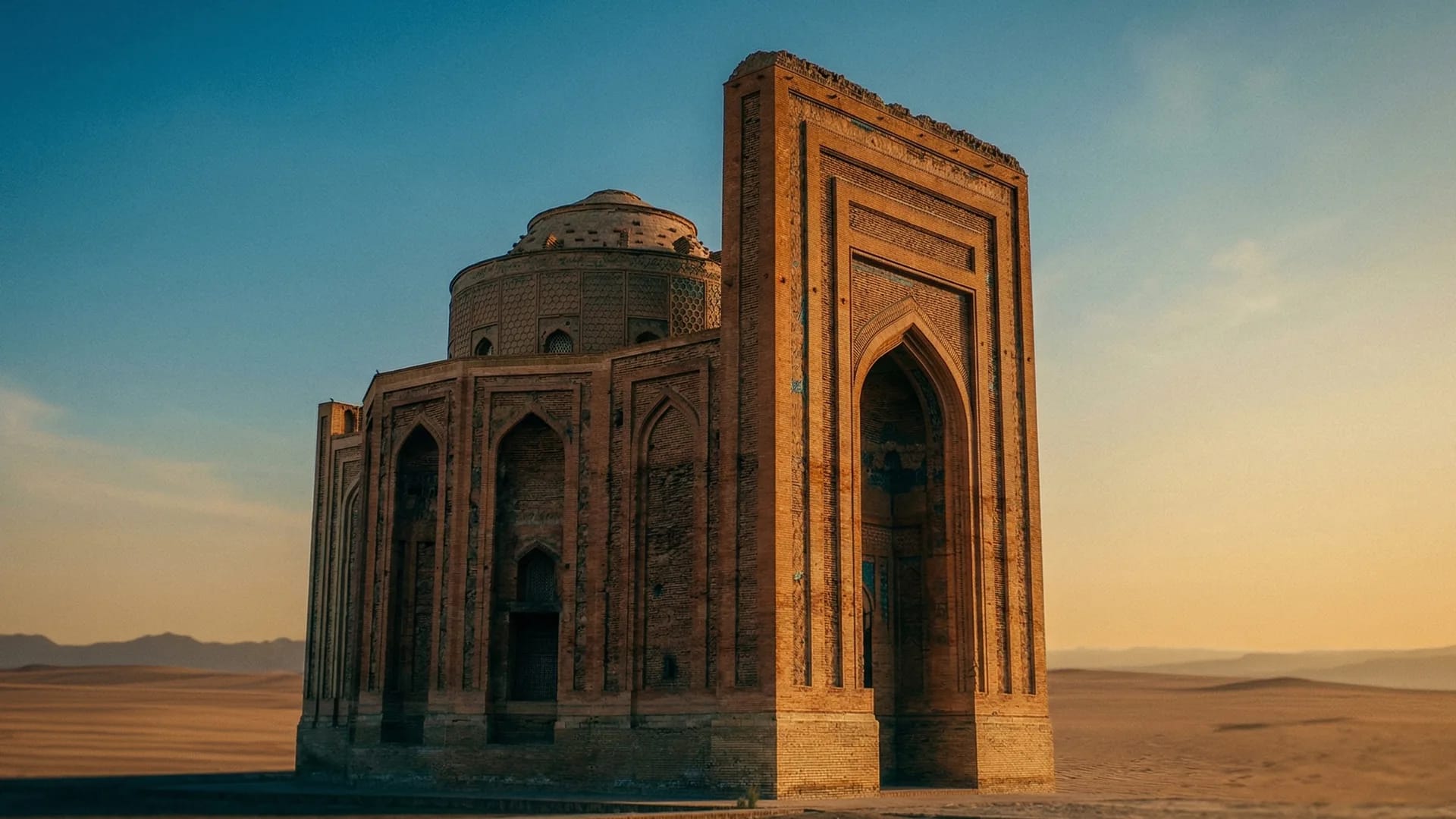
Kunya-Urgench
The former capital of the Khwarezmian Empire preserves a cluster of medieval Islamic monuments, including the tallest minaret in Central Asia.
Quick Navigation
Overview
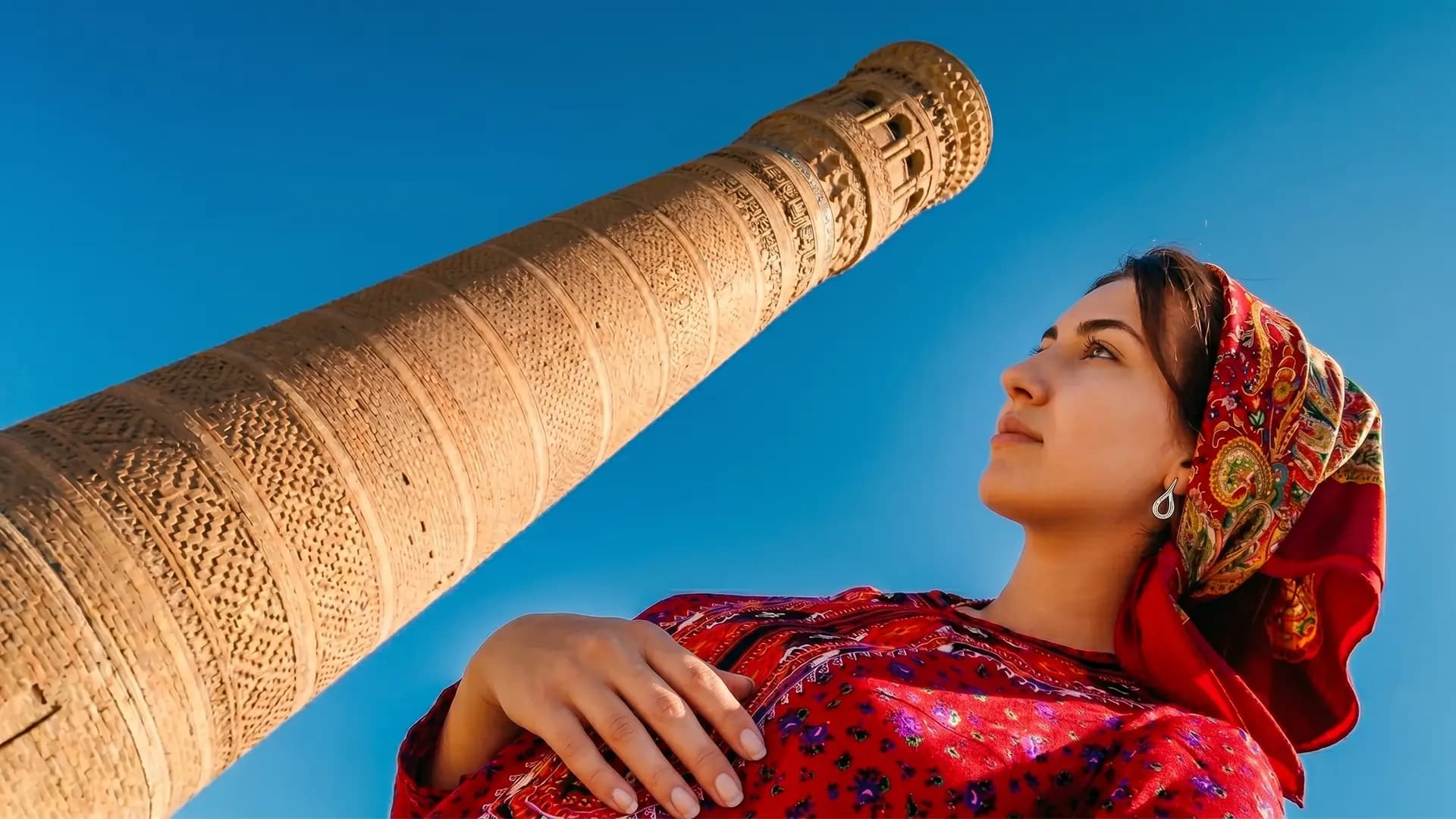
Kunya-Urgench was the capital of the Khwarezmian Empire, a state that, for a period in the early 13th century, controlled a vast swath of Central Asia and rivaled the Abbasid Caliphate in cultural output. The architects who worked here were doing things with geometry, muqarnas, and decorative tilework that would not appear in European buildings for another two or three centuries. The minaret of Kutlug-Timur, rising to around 60 meters, is the tallest surviving minaret in Central Asia - built in the early 14th century during the post-Mongol period and still structurally sound, a remarkable achievement for a brick tower that has survived earthquakes and centuries of weather.
The Mongols arrived in 1221 and made thorough work of the city. The monuments that survived - including the shrine of Il-Arslan, a Khwarezm Shah who died in 1172, and the beautifully proportioned Turabeg Khanum complex - date from different periods of the city's long history. Turabeg Khanum's interior is particularly striking: a domed hall topped by a mosaic dome whose geometric patterning is among the finest of its era.
The site today functions as both an active pilgrimage destination and an archaeological park. Turkmen families arrive on weekends to pray at the shrines, giving the place a living spiritual quality that purely archaeological sites often lack. You are not walking through a museum - you are walking through somewhere that still matters to people.
The afternoon light here does something the photographs rarely capture: it catches the glazed tilework at an angle that turns ordinary brickwork into something that seems to generate its own glow.
Highlights
Why Visit
- See the tallest surviving medieval minaret in Central Asia, still standing after seven centuries
- Explore a UNESCO site that feels genuinely undiscovered, with space and silence to absorb it
- Witness a place where medieval Islamic architecture and living pilgrimage tradition coexist
- Stand inside the Turabeg Khanum dome - one of the most geometrically refined medieval interiors in the region
- Understand the Khwarezmian Empire whose destruction by the Mongols reshaped the entire Islamic world
Best Time to Visit
April through early June brings the best conditions - temperatures sit comfortably between 20-30°C (68-86°F), and the surrounding landscape has a brief green flush before the summer heat sets in. September and October are equally pleasant for exploration. The Dashoguz region's summers are hot and dry, with temperatures climbing well above 38°C (100°F) in July and August, making midday visits uncomfortable. Winter visits are possible and often crowd-free, though nights can be cold and some services may be limited.
Getting There
Kunya-Urgench lies in the Dashoguz region of northern Turkmenistan, roughly 500 km from Ashgabat by road - a journey of around seven to eight hours through the Karakum Desert. Domestic flights from Ashgabat to Dashoguz city significantly cut the travel time, with the site then reachable by a short drive. All ground logistics, including permits and local access, are handled as part of your arranged tour.
Continue Your Journey
Ancient Merv
One of the largest cities of the medieval world, Merv's vast UNESCO-listed ruins stretch across the Karakum sands where a Silk Road empire once peaked.
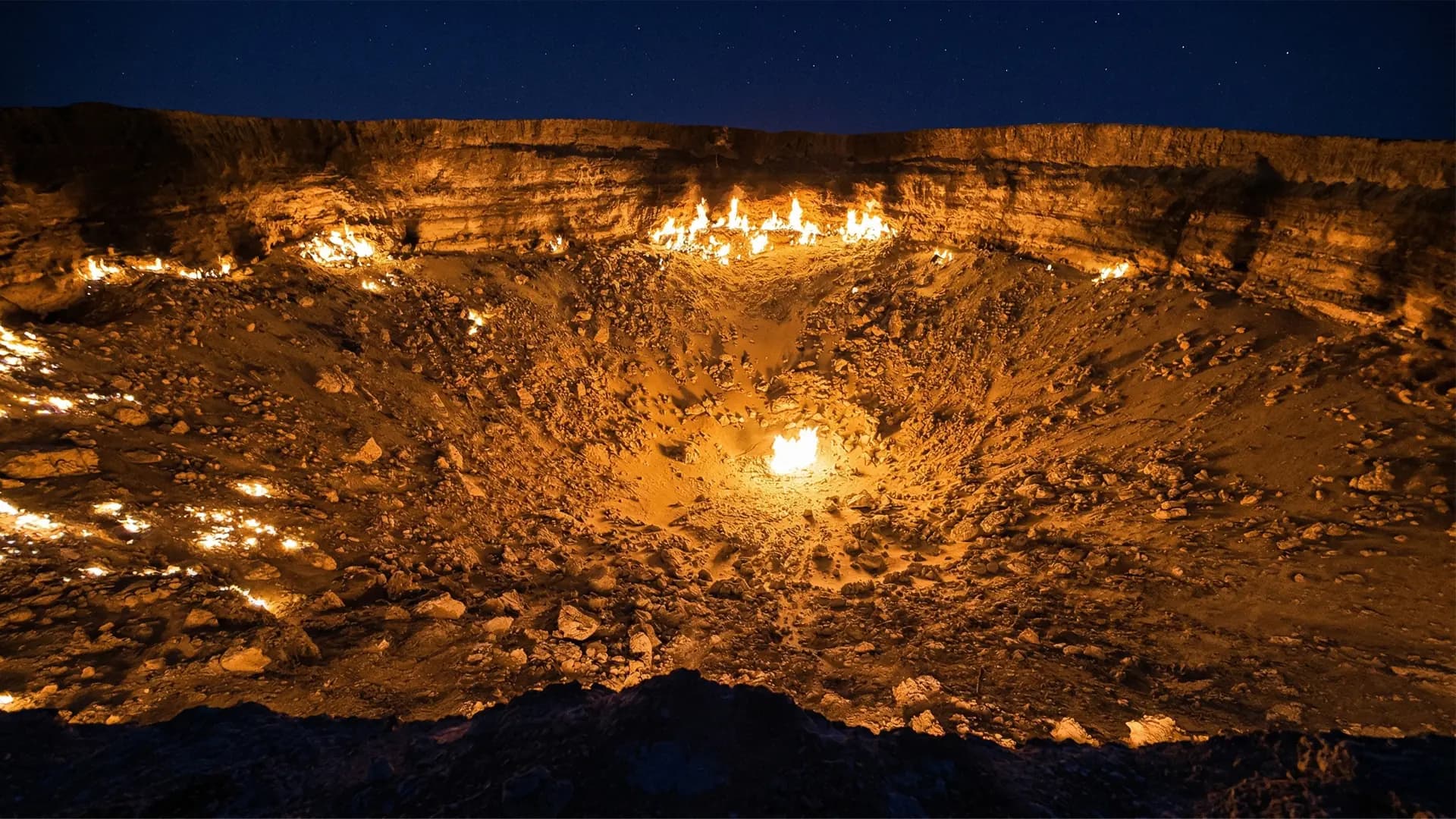
Darvaza Gas Crater
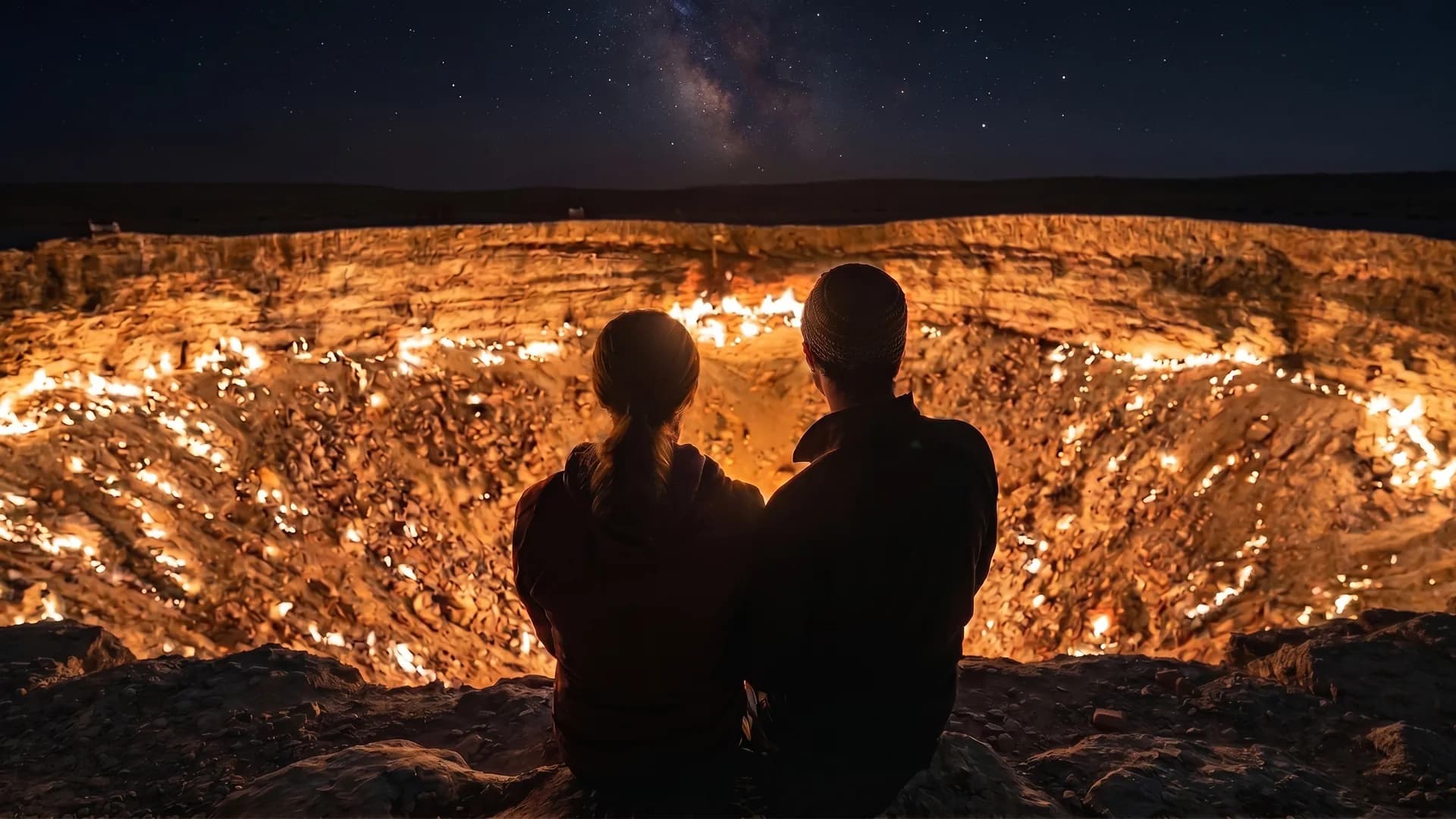
A gas crater burning continuously in the Karakum Desert since the 1970s, the so-called Door to Hell glows with an intensity that makes the surrounding desert phosphorescent.
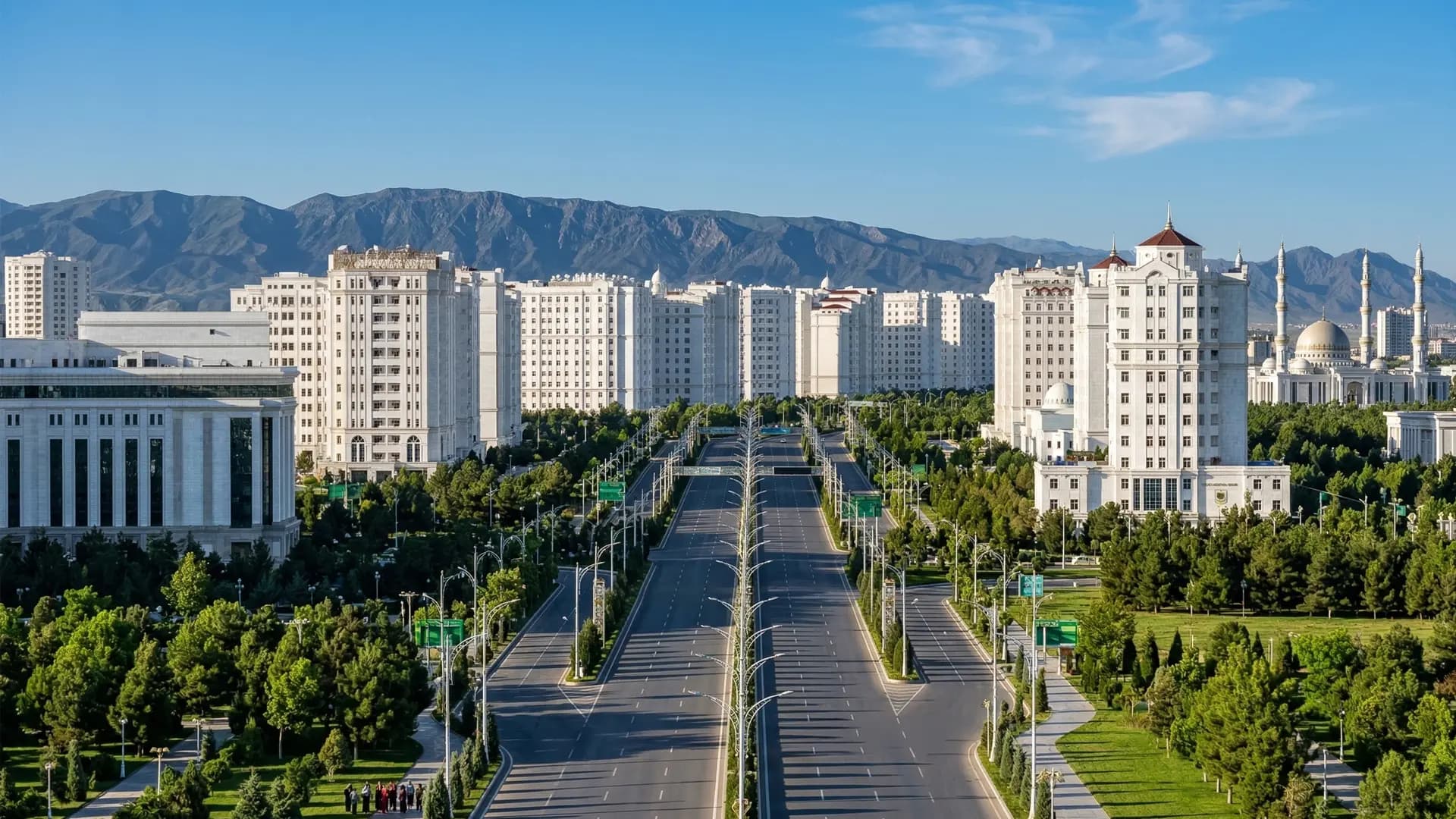
Ashgabat
Turkmenistan's capital is a city of white marble boulevards, gilded domes, and monumental architecture - a place unlike any other capital in Central Asia.
Quick Navigation
Plan Your Visit
Let our travel experts help you plan the perfect visit to this destination.
Inquire NowReady to Plan Your Journey?
Let our travel experts craft your perfect Turkmenistan adventure.
Chat with a Trip Expert