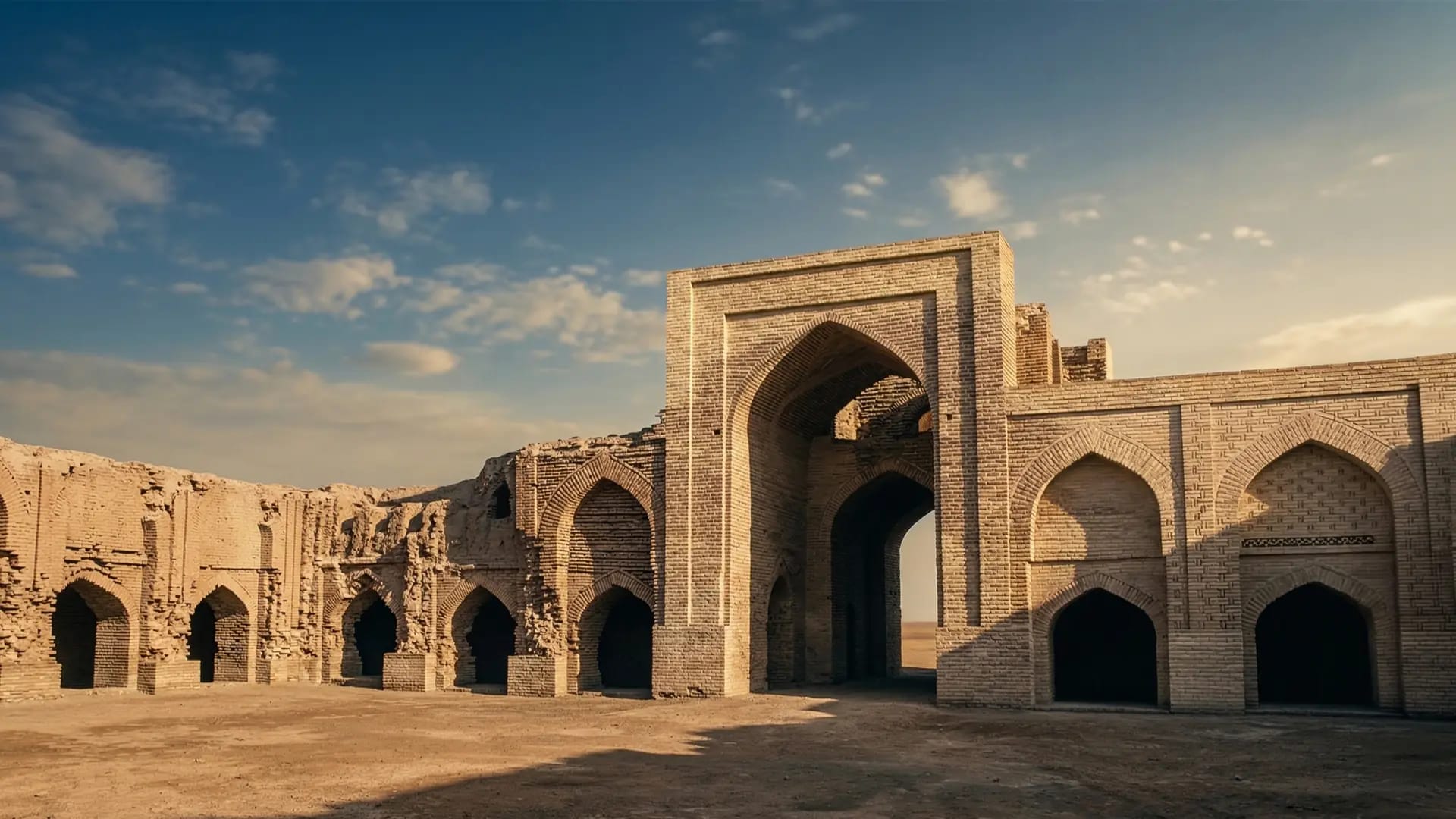
Dayakhatyn Caravanserai
One of Central Asia's most intact 11th-century Silk Road caravanserais, Dayakhatyn preserves Islamic geometric brickwork across its eastern desert facades after nine centuries.
Quick Navigation
Overview
Dating to the 11th-12th centuries and associated with the Seljuk period, Dayakhatyn follows the classic caravanserai plan - a central courtyard surrounded by rooms on all four sides, with a fortified exterior wall featuring round corner towers. The facade is decorated with geometric brickwork patterns, the kind of ornamental detail that signals this was not a purely utilitarian stop but a place where aesthetic effort was considered part of the service. Brick was the prestige material on the Silk Road; this building has it in profusion.
The site sits in the Amu Darya basin region, on what was once a major overland route connecting the cities of Khwarezm and Merv. Standing inside the central courtyard, you can do the rough arithmetic: how many traders, diplomats, monks, soldiers, and wanderers passed through here across two centuries of active use. The routes they traveled are now mostly empty steppe, but the caravanserai itself retains enough of its original structure that the spatial logic is still legible - rooms leading off a central space, designed for communal living among strangers.
What separates Dayakhatyn from the region's more famous monuments is precisely its ordinariness - in the best sense. This was not a royal tomb or a capital building. It was a working roadside institution, the medieval equivalent of a reliable overnight stop on a long desert highway. The fact that it has survived more completely than many grander buildings is one of history's small, satisfying ironies.
Highlights
Why Visit
- See one of Central Asia's most intact 11th-century Silk Road caravanserais - preserved exactly as it was built
- Walk a structure where the rooms, courtyard, and gates are still spatially intact after nine centuries
- Reach a rarely visited monument that rewards travelers willing to go beyond Merv and Ashgabat
- Combine with Lebap region sites for an eastern Turkmenistan itinerary covering the full arc of Silk Road history
- Photograph geometric Seljuk brickwork in a desert setting without crowds, fences, or reconstruction scaffolding
Best Time to Visit
March through May and September through November are the best months for Lebap, when temperatures across the eastern desert are moderate and the Amu Darya basin landscape is at its most photogenic. Summer in Lebap is extremely hot - the region sits in one of Turkmenistan's warmest zones, and outdoor exploration from June through August requires careful timing around early mornings. Winter visits are feasible and the site is completely uncrowded, with cool, clear days that suit photography of the brickwork detail.
Getting There
Dayakhatyn Caravanserai is located in the Lebap region in eastern Turkmenistan, accessible from Turkmenabat city. Turkmenabat is connected to Ashgabat by domestic flights taking roughly an hour. From Turkmenabat, the caravanserai is reached by road - a drive of a few hours depending on the route and conditions. The site is typically included in multi-day Lebap itineraries; all transport and guide arrangements are handled as part of the tour.
Continue Your Journey
Ancient Merv
One of the largest cities of the medieval world, Merv's vast UNESCO-listed ruins stretch across the Karakum sands where a Silk Road empire once peaked.
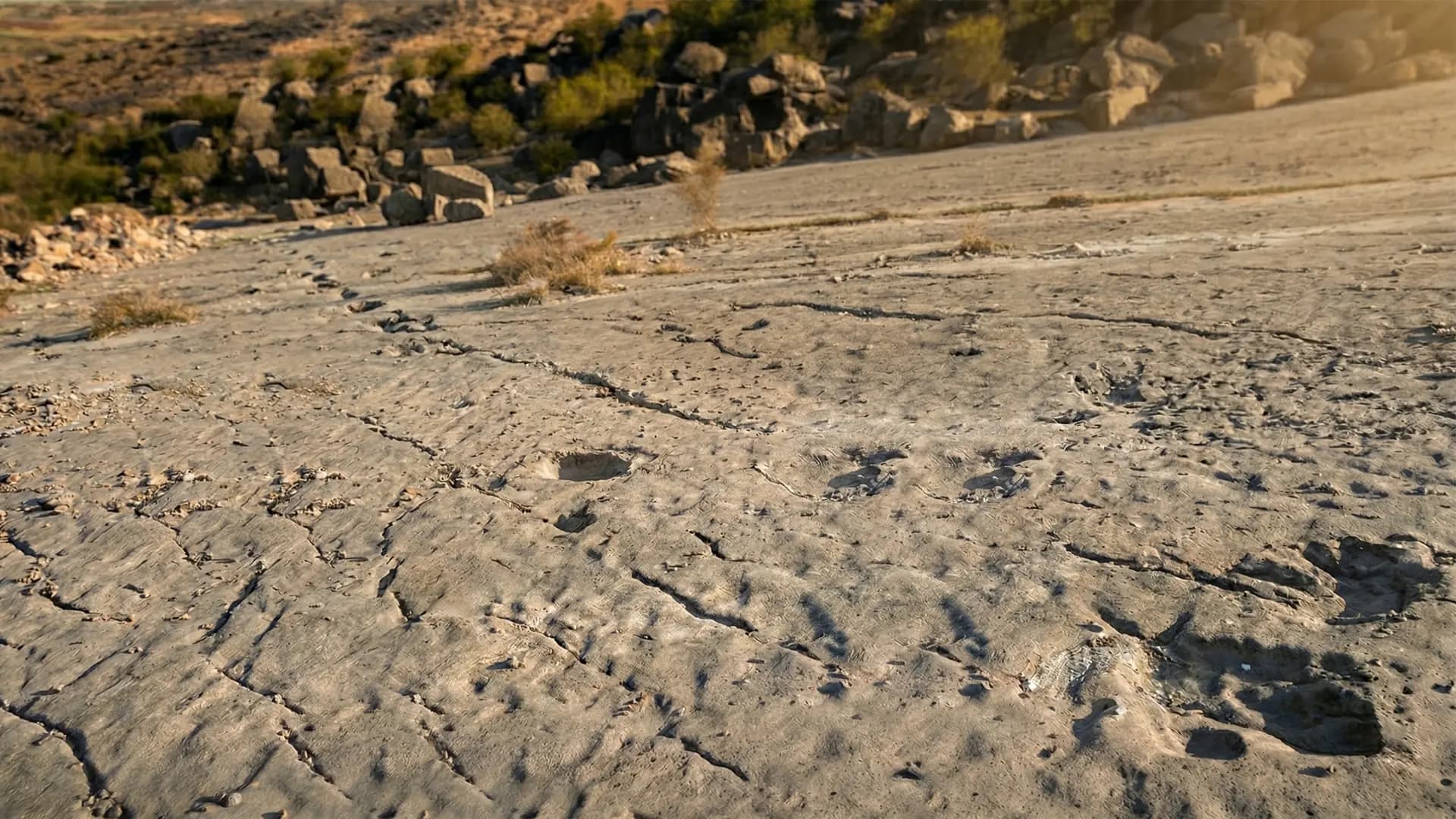
Dinosaur Plateau
A remote plateau in eastern Turkmenistan preserving hundreds of dinosaur footprints in exposed rock - one of the world's densest concentrations of dinosaur trackways.
Quick Navigation
Plan Your Visit
Let our travel experts help you plan the perfect visit to this destination.
Inquire NowReady to Plan Your Journey?
Let our travel experts craft your perfect Turkmenistan adventure.
Chat with a Trip Expert