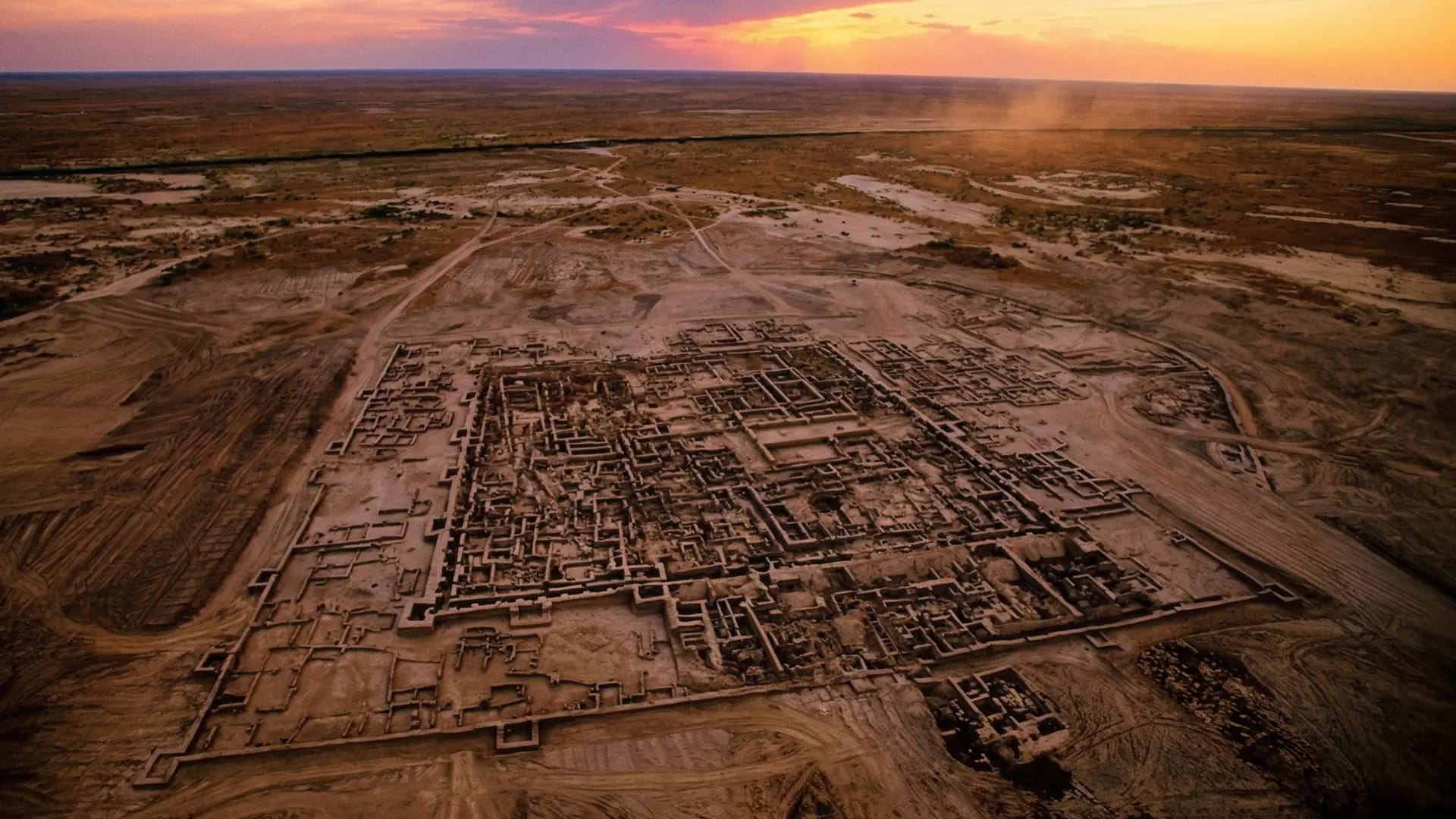
Gonur Depe
A Bronze Age city in the Karakum Desert, older than most classical civilizations, where a forgotten urban culture flourished beside a long-vanished river.
Quick Navigation
Overview
The BMAC, as archaeologists call it, was only seriously identified in the 20th century through the meticulous excavations led by the late Viktor Sarianidi. What he found beneath the desert surface was not a simple settlement but a layered royal city: a central palace-temple complex, separate royal necropolis, fire temples with altars, and evidence of long-distance trade with civilizations as far away as the Indus Valley and ancient Mesopotamia. Gonur Depe sat at the hub of Bronze Age exchange routes that the Silk Road would later shadow by a thousand years.
The visible site today covers a large desert expanse marked by excavated mud-brick foundations and reconstructed sections that hint at original form. The remains of the main palace complex, the so-called Great Enclosure, and the surrounding neighborhoods of what was a functioning city spread across the flat Margiana plain. There is no dramatic skyline - Bronze Age architecture rarely survives vertically - but the footprint conveys scale. Researchers have found evidence of Zoroastrian fire worship here, which places Gonur Depe in the origin story of one of the world's oldest living religions.
What makes the site quietly unsettling is that it did not fall by conquest or disaster. The Murghab River, which sustained it, simply shifted course. The city was abandoned not because it was destroyed, but because the water left. An entire civilization, gone because a river changed its mind. That particular category of ending - not fire, not invasion, just the slow withdrawal of the one thing you cannot live without - has a way of staying with you on the drive back through the desert.
Highlights
Why Visit
- Walk a Bronze Age city that predates classical Greece, Rome, and the Persian Achaemenid Empire
- Visit one of Central Asia's most significant archaeological discoveries of the 20th century
- See the possible birthplace of Zoroastrian fire worship on the original ceremonial ground
- Walk Karakum Desert ruins abandoned not by war or conquest, but simply because a river changed course
- Gain access to a remote, rarely visited site that most travelers to the region never reach
Best Time to Visit
October through April covers the comfortable window for visiting Gonur Depe. The site sits exposed on flat desert with no natural shade, so the shoulder seasons of October-November and March-April offer the most pleasant conditions. Winter visits are feasible and the low-angle light makes for remarkable photography across the flat ruins. Summer temperatures in the Mary region routinely exceed 40°C (104°F), making July and August visits uncomfortable and logistically challenging even with our support.
Getting There
Gonur Depe lies in the Murghab Delta north of Mary city, reachable by road from Mary in roughly an hour and a half depending on conditions. Mary itself is connected to Ashgabat by domestic flights taking under an hour, or by road for those wanting to see the Karakum landscape en route. The access track to the site requires a capable vehicle; all transport and guide arrangements are handled as part of the tour.
Continue Your Journey
Ancient Merv
One of the largest cities of the medieval world, Merv's vast UNESCO-listed ruins stretch across the Karakum sands where a Silk Road empire once peaked.
Ashgabat
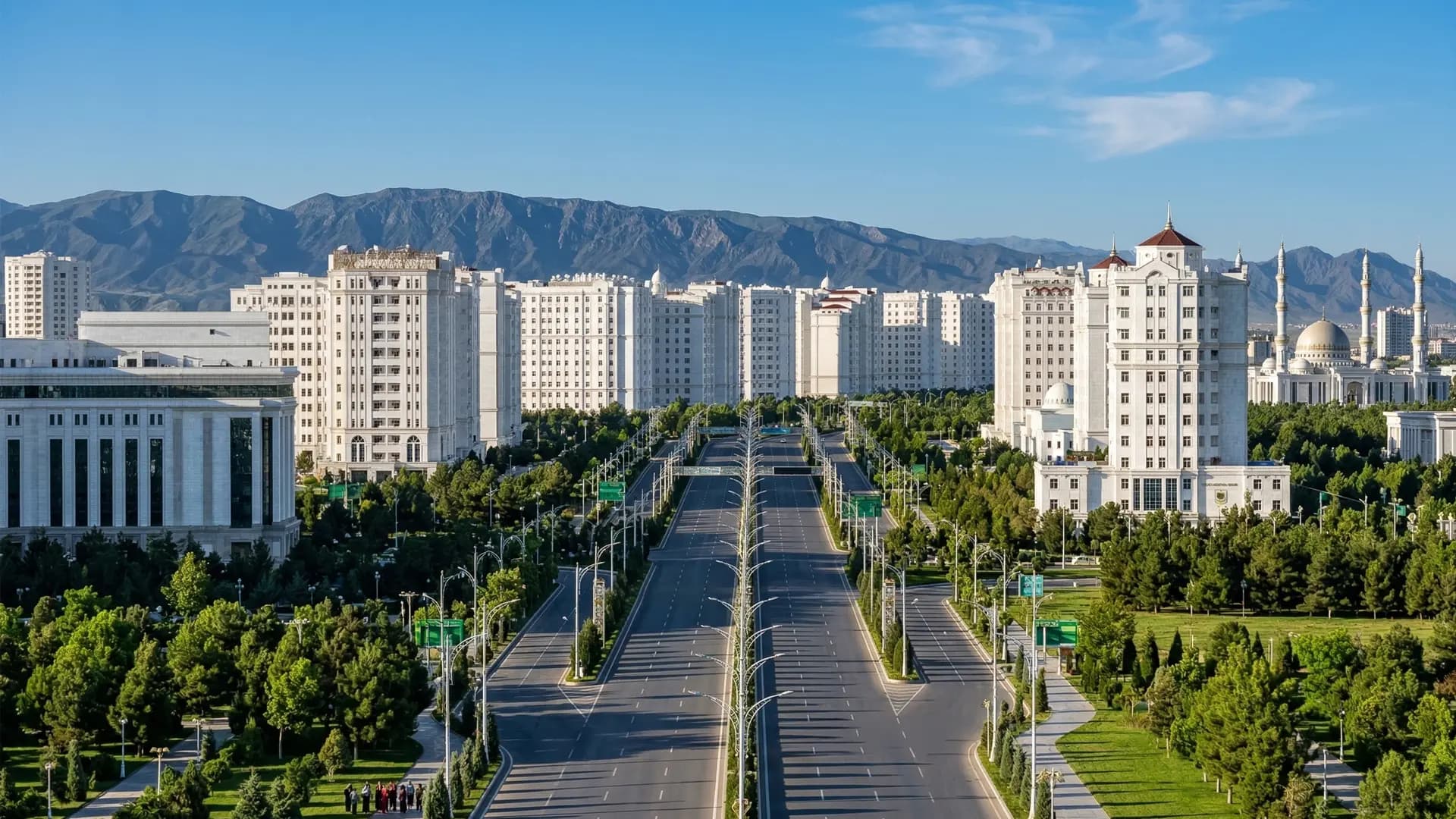
Turkmenistan's capital is a city of white marble boulevards, gilded domes, and monumental architecture - a place unlike any other capital in Central Asia.
Quick Navigation
Plan Your Visit
Let our travel experts help you plan the perfect visit to this destination.
Inquire NowReady to Plan Your Journey?
Let our travel experts craft your perfect Turkmenistan adventure.
Chat with a Trip Expert