Kyz-Kala
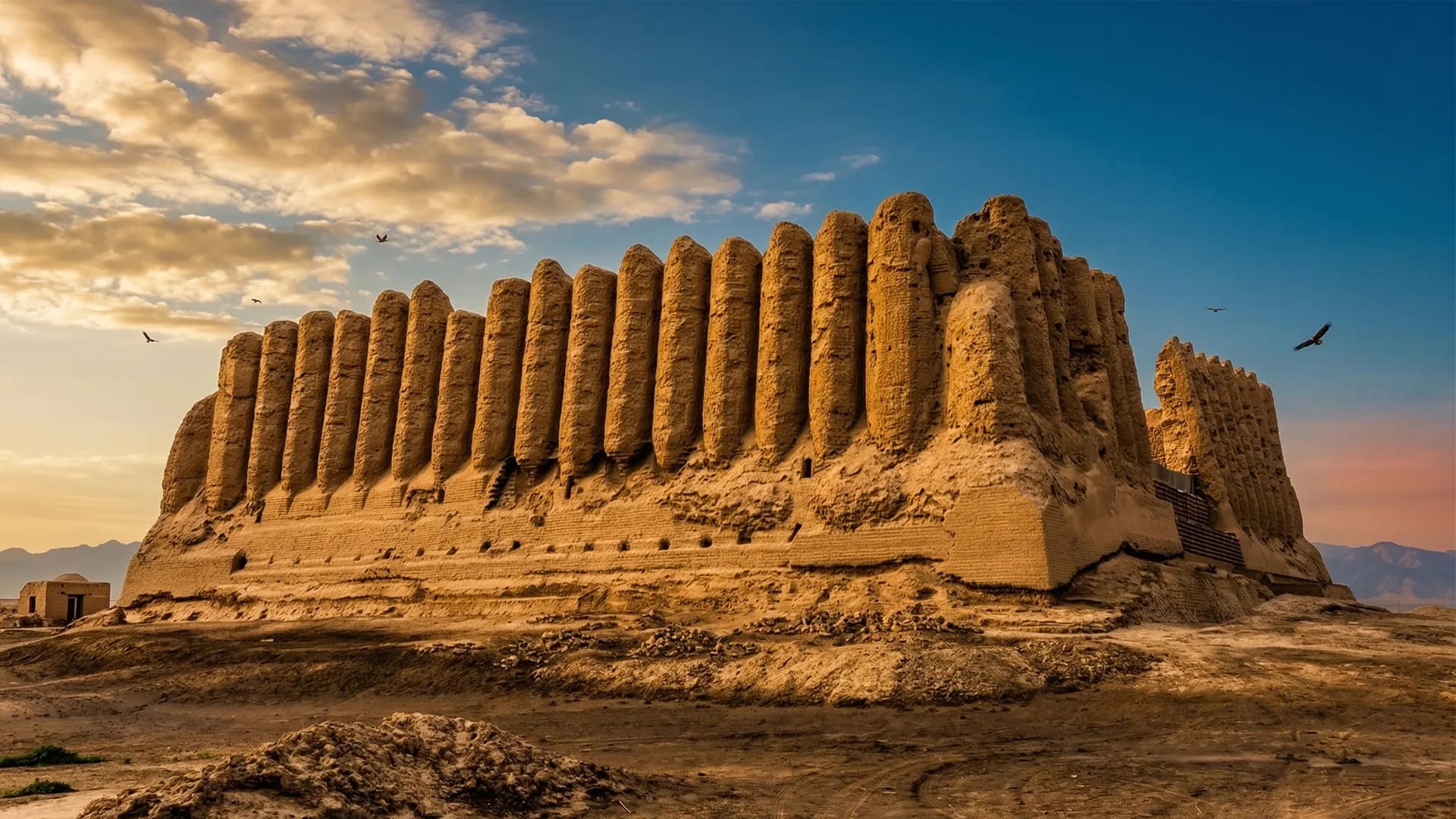
Twin early medieval castles at Ancient Merv with dramatically corrugated mud-brick walls - among the most visually distinctive ruins surviving from the Silk Road era.
Quick Navigation
Overview
Dating to the early medieval period, probably the 6th to 8th centuries CE, the Kyz-Kala castles served as fortified residences - the kind of secure, elevated dwelling that a wealthy family or local ruler in the Sasanian or early Islamic period would have built when the plains around Merv were productive and politically complicated. The name translates roughly as "Maiden's Castles," a common naming convention across Central Asian ruins of unclear origin, which is the polite way of saying no one knows where the name actually came from.
What makes the site worth close examination is the wall construction. The exterior faces of the towers are formed by a series of deeply fluted half-cylinders - a technique that is structural as much as decorative, distributing load and creating a surface that catches shadow differently at every hour of the day. In morning light the walls read almost like drapery. By afternoon they are geometric and severe. Photographers have a particular fondness for the hour before sunset.
The castles are partly stabilized, partly still surrendering to gravity, which gives them a quality that over-restored ruins lose entirely. There is a visible honesty in the way the upper courses of brick are softened by centuries of weather while the lower sections remain harder and more precise. Standing in front of Big Kyz-Kala, you are looking at roughly 1,400 years of continuous dissolution - a slow process that has, paradoxically, made the building more beautiful than it probably was when finished.
Highlights
Why Visit
- See a form of mud-brick architecture found nowhere else - the corrugated cylinder towers are genuinely unique
- Photograph one of the most visually distinctive ruins in Central Asia, best at low morning or evening light
- Pair a Kyz-Kala visit with the full Ancient Merv UNESCO complex for a day inside one of history's great cities
- Experience ruins that retain their original drama because they have not been over-restored or reconstructed
- Walk within touching distance of 1,400-year-old walls that have never been fully explained by historians
Best Time to Visit
Spring (April-May) and autumn (September-October) offer the most comfortable conditions on the Merv plain, with moderate temperatures and clear light that brings out the wall textures well. The corrugated towers photograph best in low-angle morning or late afternoon light, which makes early starts or late-afternoon arrivals worth planning. Summer heat across the Mary region is intense from June through August, limiting comfortable outdoor time to early morning. Winter is cool and quiet, with good light for photography.
Getting There
Kyz-Kala is located within the Ancient Merv archaeological zone near Mary city, roughly 30 km east of the city center. It is typically visited alongside the Sultan Sanjar Mausoleum and other Merv sites as part of a full-day excursion from Mary. Mary is reached from Ashgabat by domestic flight in under an hour. All site access, guiding, and transport within the Merv complex are arranged as part of our tours.
Continue Your Journey
Ancient Merv
One of the largest cities of the medieval world, Merv's vast UNESCO-listed ruins stretch across the Karakum sands where a Silk Road empire once peaked.
Sultan Sanjar Mausoleum
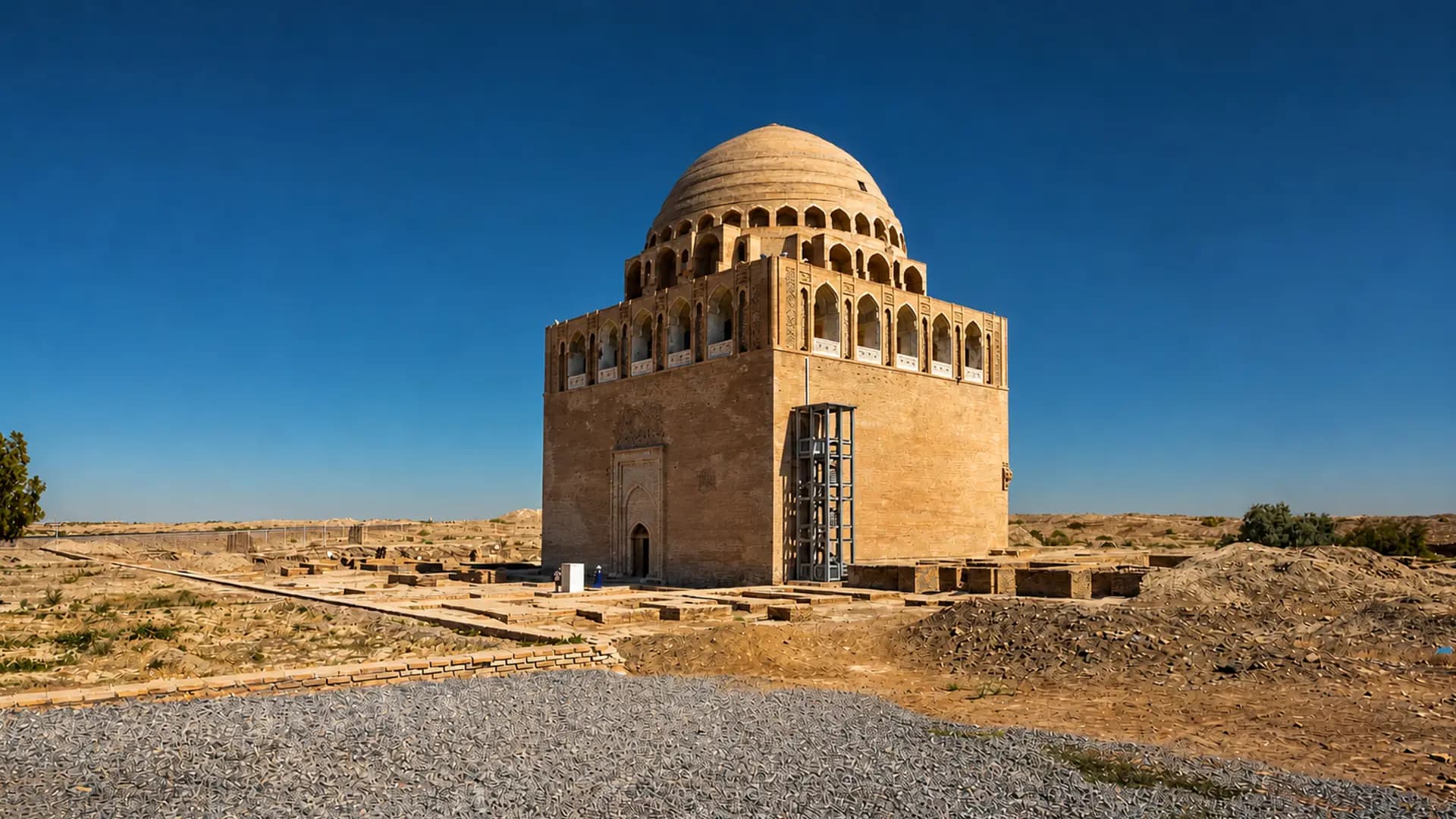
The crowning architectural achievement of the Seljuk Empire, a 12th-century mausoleum in ancient Merv whose turquoise-tiled dome was once visible for days of travel.
Quick Navigation
Plan Your Visit
Let our travel experts help you plan the perfect visit to this destination.
Inquire NowReady to Plan Your Journey?
Let our travel experts craft your perfect Turkmenistan adventure.
Chat with a Trip Expert