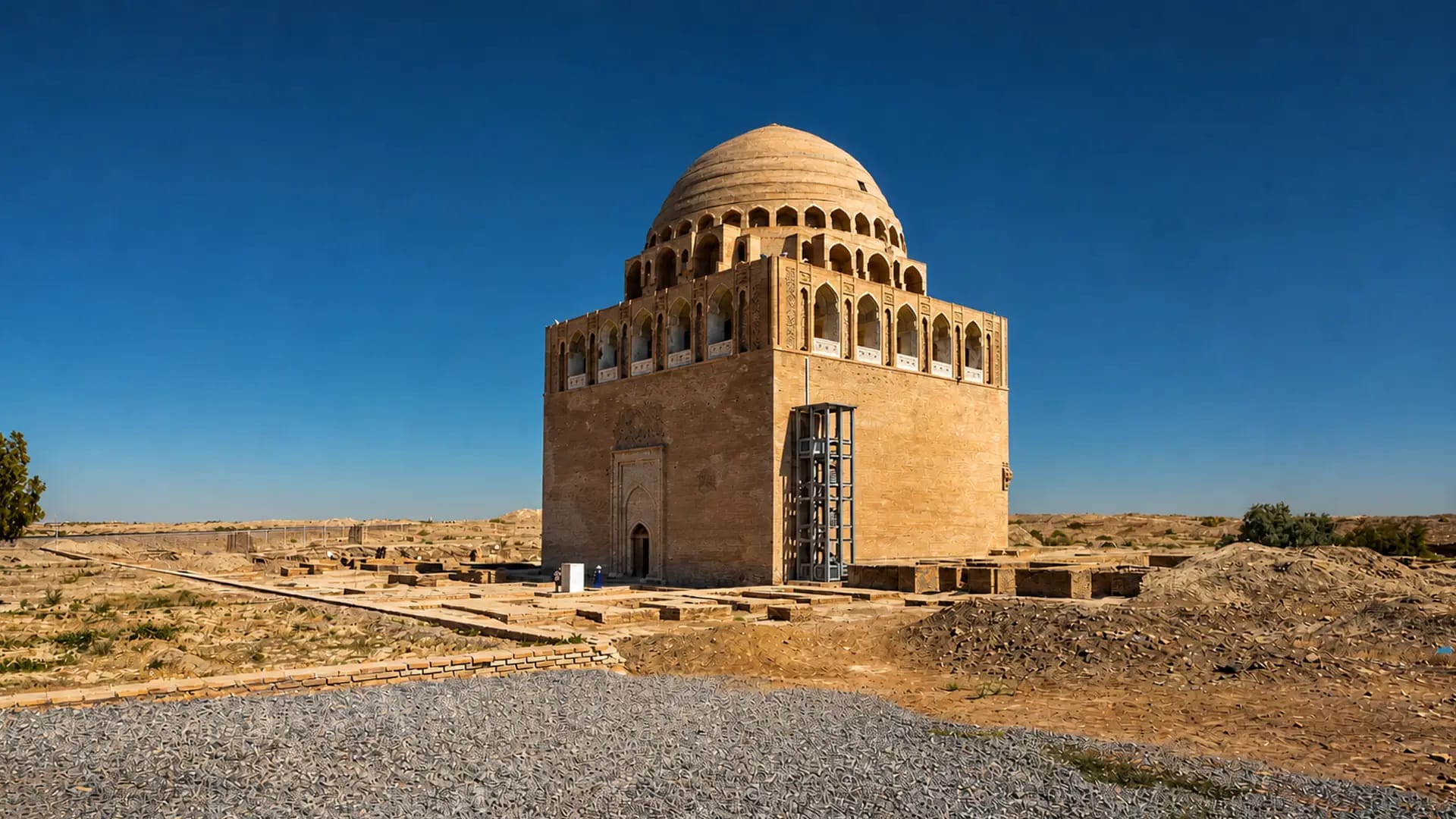
Sultan Sanjar Mausoleum
The crowning architectural achievement of the Seljuk Empire, a 12th-century mausoleum in ancient Merv whose turquoise-tiled dome was once visible for days of travel.
Quick Navigation
Overview
The Seljuk Empire at its height controlled territory from Anatolia to Central Asia, and Merv - medieval Marv - was among its great capitals. The Sultan Sanjar Mausoleum is the most intact building surviving from that era, and its engineering still commands attention. The double-dome construction, which allows an inner dome at a lower height while the outer shell rises dramatically higher, is one of the early examples of this technique in the region. The outer dome was reportedly covered in turquoise tiles that shimmered from a great distance; most of those tiles are gone, but the form survives with remarkable completeness.
Inside, the space operates the way good medieval architecture was meant to - the proportions create a stillness that feels almost engineered. The octagonal transitional zone between the square base and the circular dome is handled with structural elegance, using squinches that distribute the weight while decorating the space. Archaeologists and restorers have worked carefully here over the decades, and the result is a building that has been stabilized without being falsified.
Sanjar himself had a complicated ending for a man whose tomb was built to project eternal power. He was captured by the Oghuz Turks and held prisoner for years before dying, and the city of Merv was later razed by the Mongols in a destruction so thorough that medieval chroniclers called it the end of the world. His mausoleum was one of the few things they left standing, presumably because it was too solid, too tall, and too obviously the tomb of someone who mattered. That may be the most fitting tribute to a Seljuk sultan that history could arrange.
Highlights
Why Visit
- Stand inside one of the finest intact examples of Seljuk imperial architecture anywhere in the world
- Visit the tomb of the ruler whose empire shaped medieval Anatolia, Persia, and Central Asia simultaneously
- See double-dome engineering from the 12th century within the vast Ancient Merv archaeological site
- Explore a UNESCO World Heritage site where five ancient cities are layered across the same plain
- Experience ancient Merv with almost no other international visitors - a city once larger than medieval London
Best Time to Visit
April through May and September through October are the recommended months for Ancient Merv, offering temperatures that make walking the open site comfortable. The Murghab plain offers no shade, so summer from June to August is genuinely harsh - daytime heat makes extended outdoor visits inadvisable. Spring visits occasionally coincide with wildflowers across the surrounding steppe, which contrasts memorably with the brick ruins. November through February is cool but manageable, and the site is particularly uncrowded in winter.
Getting There
Sultan Sanjar Mausoleum sits within the Ancient Merv archaeological zone, around 30 km east of Mary city. Mary is reached from Ashgabat by a short domestic flight or by road across the Karakum. From Mary, the drive to the mausoleum takes approximately 30-40 minutes. Our tours to Ancient Merv include the mausoleum as part of a wider site visit covering multiple historical periods across the Merv plain.
Continue Your Journey
Ancient Merv
One of the largest cities of the medieval world, Merv's vast UNESCO-listed ruins stretch across the Karakum sands where a Silk Road empire once peaked.
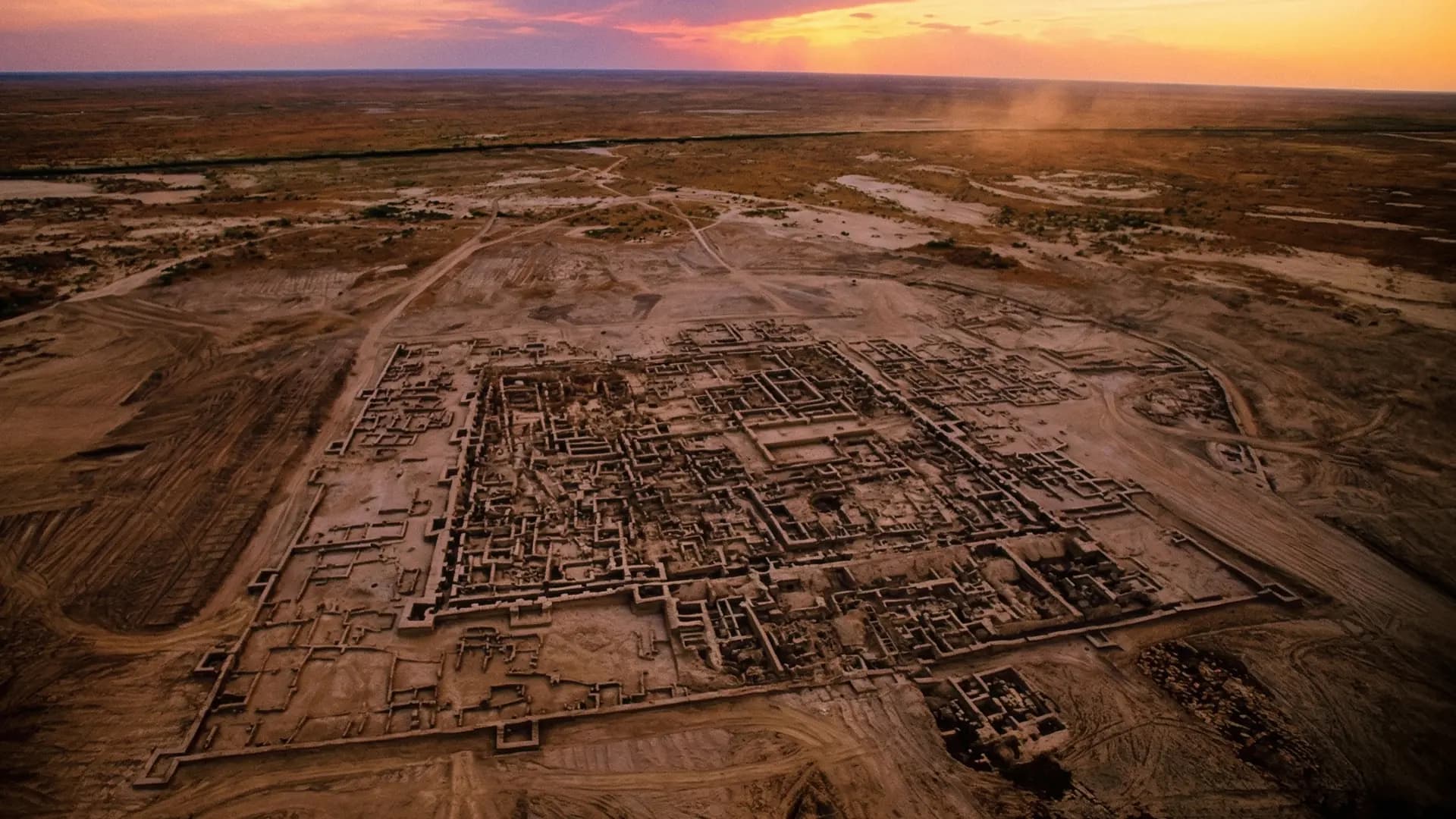
Gonur Depe
A Bronze Age city in the Karakum Desert, older than most classical civilizations, where a forgotten urban culture flourished beside a long-vanished river.
Quick Navigation
Plan Your Visit
Let our travel experts help you plan the perfect visit to this destination.
Inquire NowReady to Plan Your Journey?
Let our travel experts craft your perfect Turkmenistan adventure.
Chat with a Trip Expert