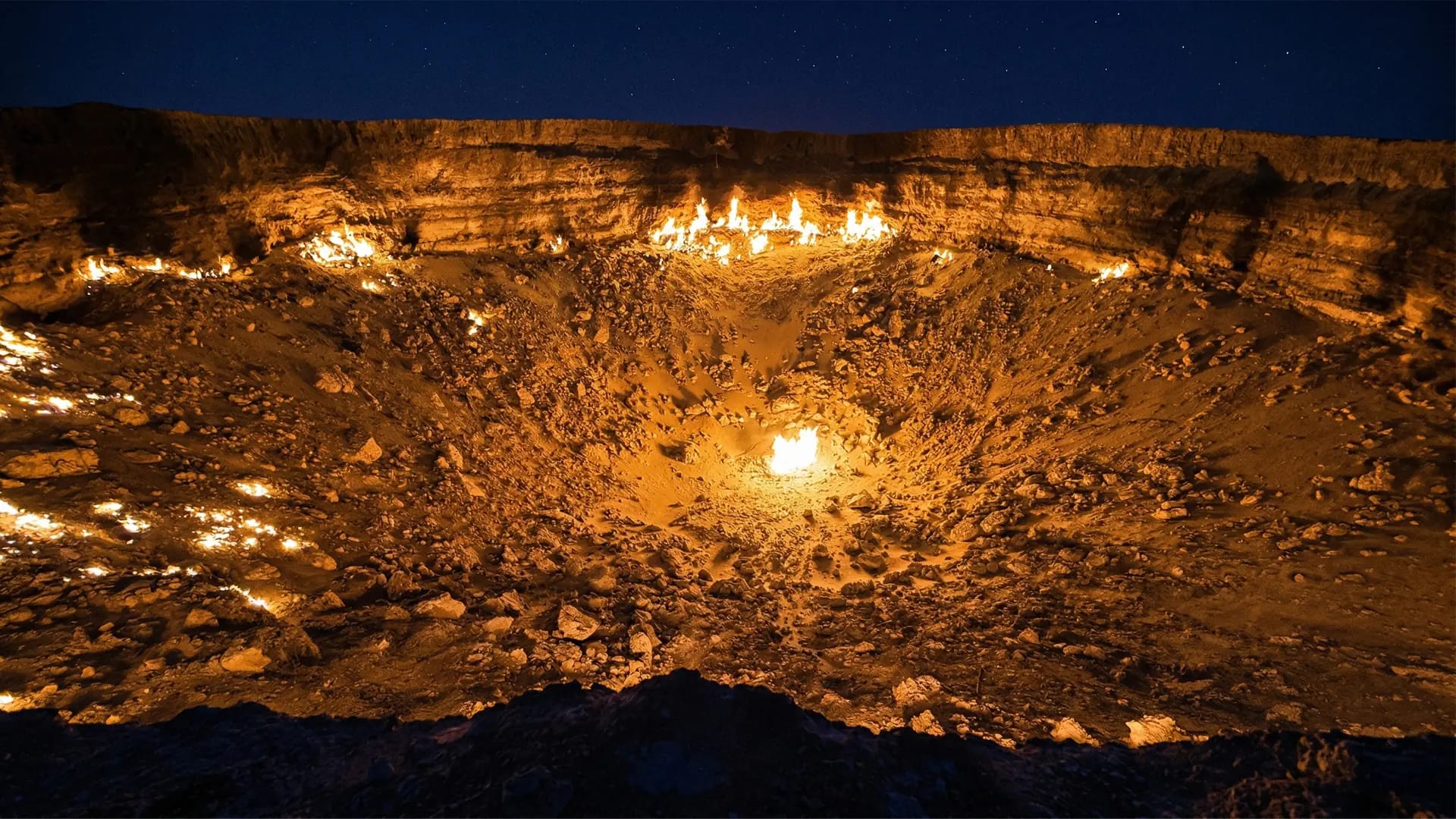
Darvaza Gas Crater
A gas crater burning continuously in the Karakum Desert since the 1970s, the so-called Door to Hell glows with an intensity that makes the surrounding desert phosphorescent.
Quick Navigation
Overview
The crater sits in the Ahal region of central Turkmenistan, a wide, roughly circular pit ringed by eroded edges and filled with a constantly moving field of flames. At ground level during the day, it registers as an impressive geological curiosity. After dark, it becomes something else entirely - a roaring, orange-lit void in the desert floor that casts a dome of warm light visible from a considerable distance across the flat Karakum, turning the surrounding sand an improbable shade of amber. The Door to Hell nickname, which circulated online long before most people knew Turkmenistan was a country, is hyperbolic but not entirely inaccurate.
The science behind the ongoing combustion involves a large underground gas reservoir that continues to feed the surface fire. The specific mechanics of why the burn has sustained at this scale for so long remain a subject of interest to petroleum engineers as well as to tourists. In 2022, Turkmenistan's president officially ordered efforts to extinguish the crater - a project that has not yet succeeded, and which has, if anything, increased international curiosity about the site.
Visiting requires an overnight stay in the desert - camping adjacent to the crater is both possible and, by general consensus, the single most memorable night available to a traveler in Central Asia. The crater's roar is audible at camp. The warmth it radiates is measurable. The stars above the Karakum, unimpeded by any light pollution beyond the crater itself, are exceptional.
By morning, the fire looks more modest. By the following evening, when you see it again from the road, still glowing in the rearview mirror, you understand why no one forgets it.
Highlights
Why Visit
- Camp overnight beside a burning crater that has been alight for half a century - an experience with no equivalent on Earth
- See the Door to Hell transform after dark into a roaring amphitheater of fire that lights up the desert floor
- Watch Karakum Desert stars from a campsite where the only artificial light is the crater itself
- Stand at the rim of an accidental geological spectacle that engineers have failed to extinguish for decades
- Experience the Karakum Desert in its full scale - flat, silent, and immense - from one of its few dramatic focal points
Best Time to Visit
April, May, September, and October are the most comfortable months, with desert temperatures ranging from 20-32°C (68-90°F) during the day and pleasantly cool nights. The crater is worth visiting in any season, but summer - June through August - turns the Karakum into a furnace, with daytime temperatures regularly exceeding 45°C (113°F), making the drive and the exposed desert camp genuinely challenging. The crater itself, of course, is always hot. Winter visits are possible and increasingly popular for the dramatic contrast between cold desert air and firelit warmth; January nights can drop below freezing, so proper sleeping equipment is essential.
Getting There
The Darvaza Gas Crater lies roughly 260 km north of Ashgabat on the highway toward Dashoguz, a drive of approximately three to four hours. The final approach from the main road crosses open desert terrain where a 4WD vehicle is the practical choice. No advance permit is currently required to visit the crater area itself, though all visits are arranged through our team, who handle transport, overnight camp setup, and all logistics for the desert stay.
Tours Featuring Darvaza Gas Crater
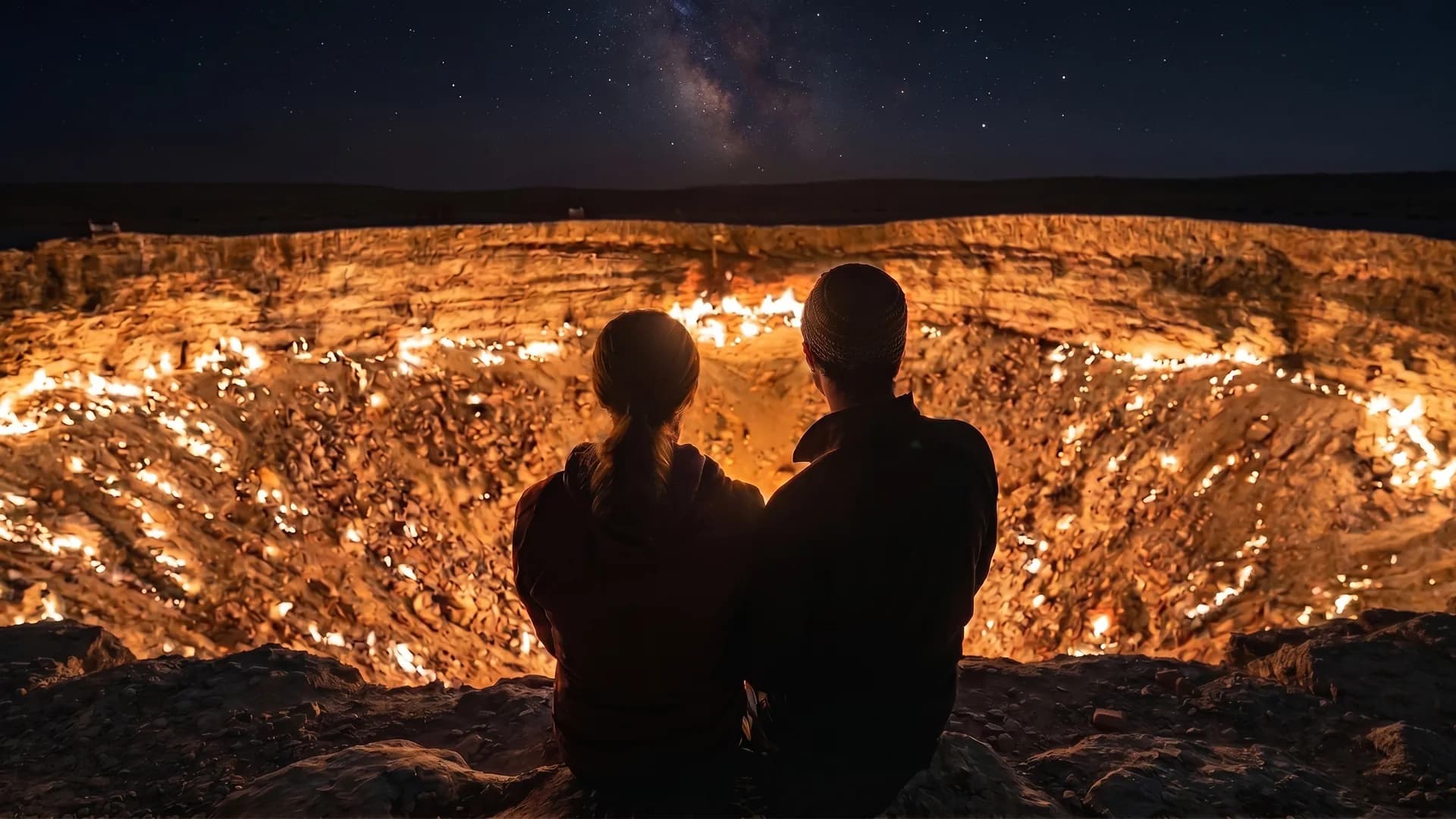
Ashgabat, Darvaza & Kunya Urgench: 3-Day Iran–Uzbekistan Crossing
$540–$980
per person
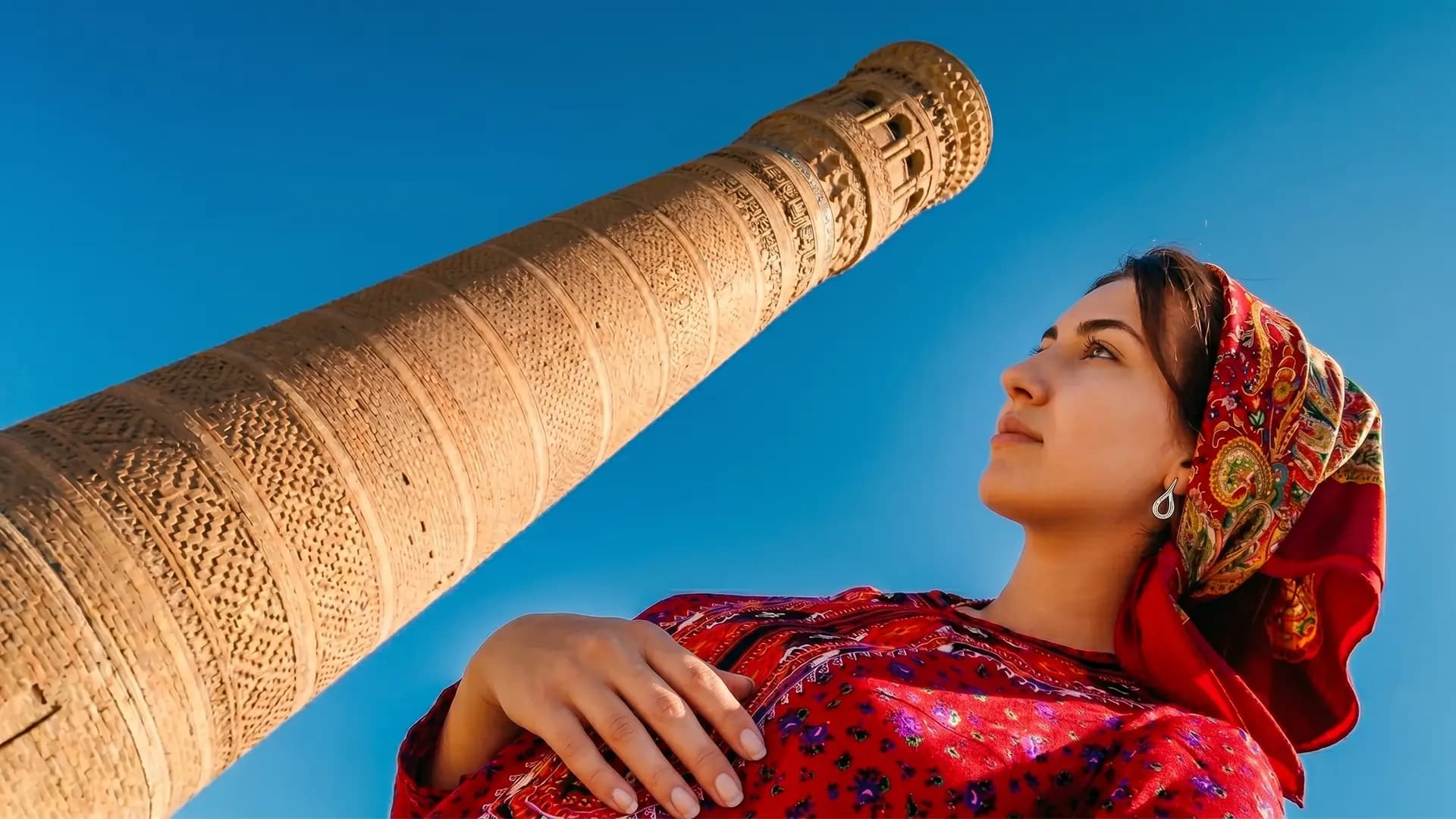
Ashgabat, Darvaza & Kunya Urgench: Capital, Crater & Caravanserai
$690–$1,350
per person
Merv, Darvaza & Kunya Urgench: 4-Day Silk Road Crossing
$680–$1,500
per person
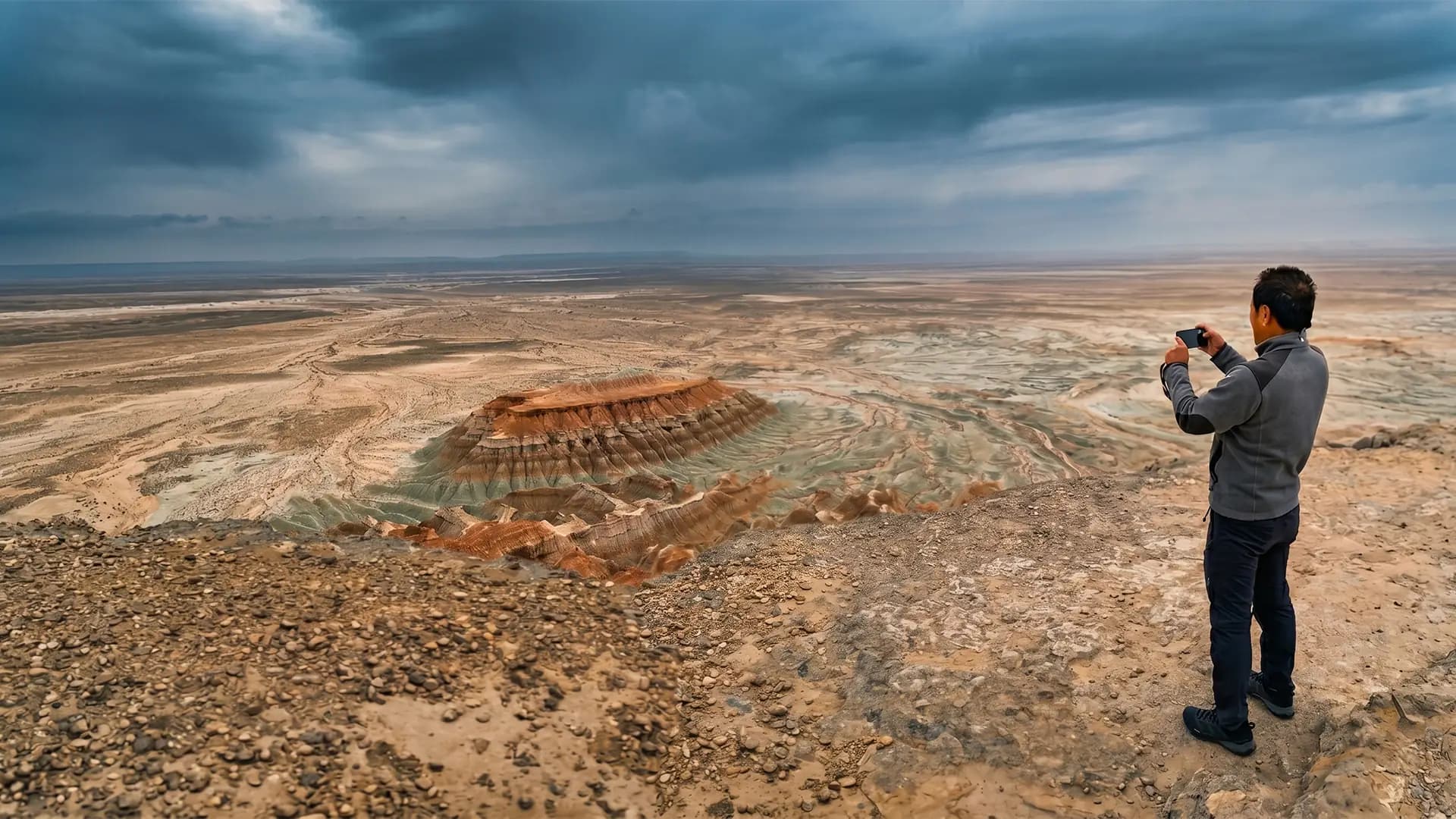
Ashgabat, Darvaza & Merv: 7-Day Turkmenistan Grand Tour
$980–$2,200
per person
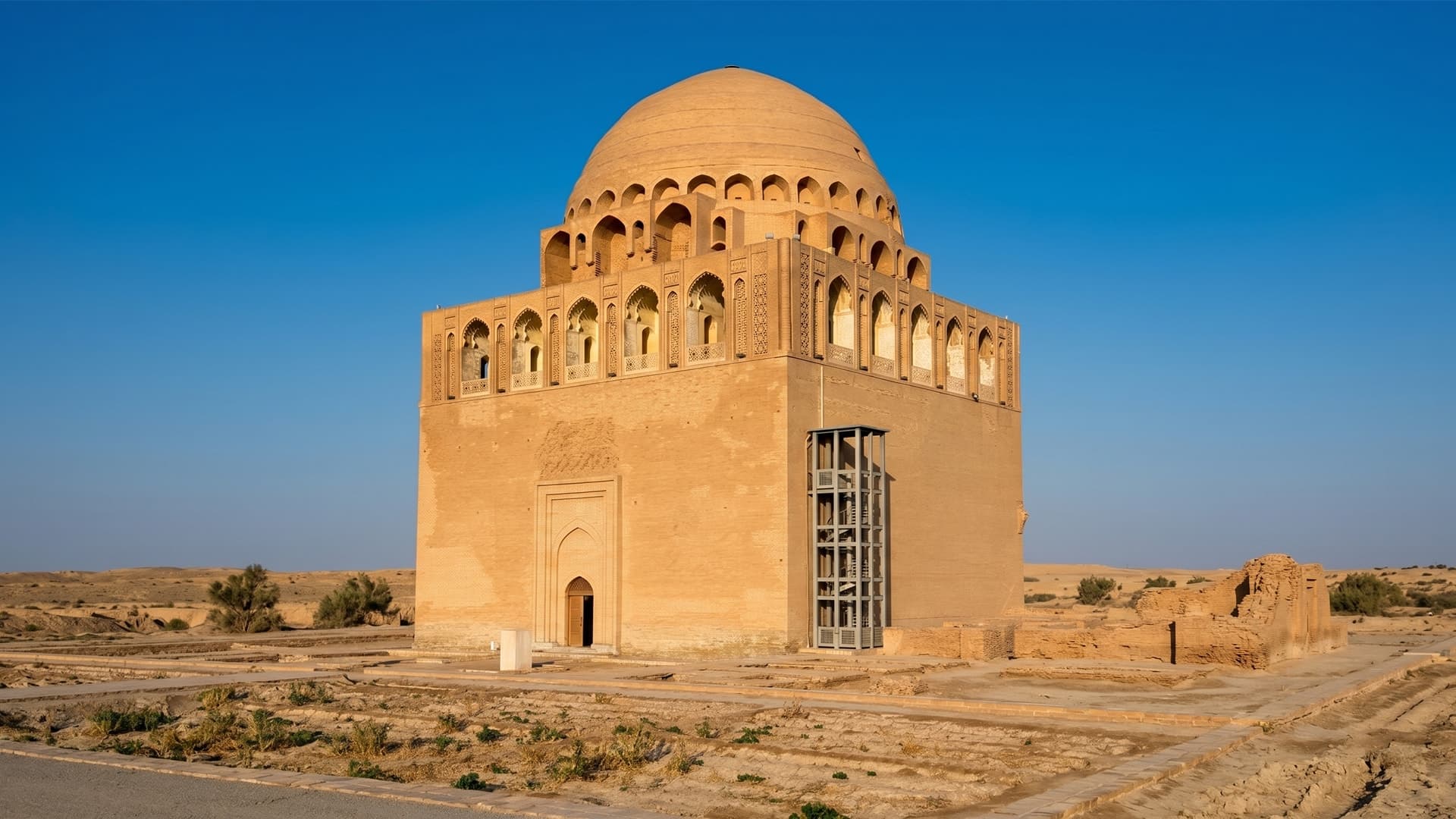
Ashgabat, Merv & Darvaza: 5-Day Journey to Uzbekistan
$780–$1,750
per person
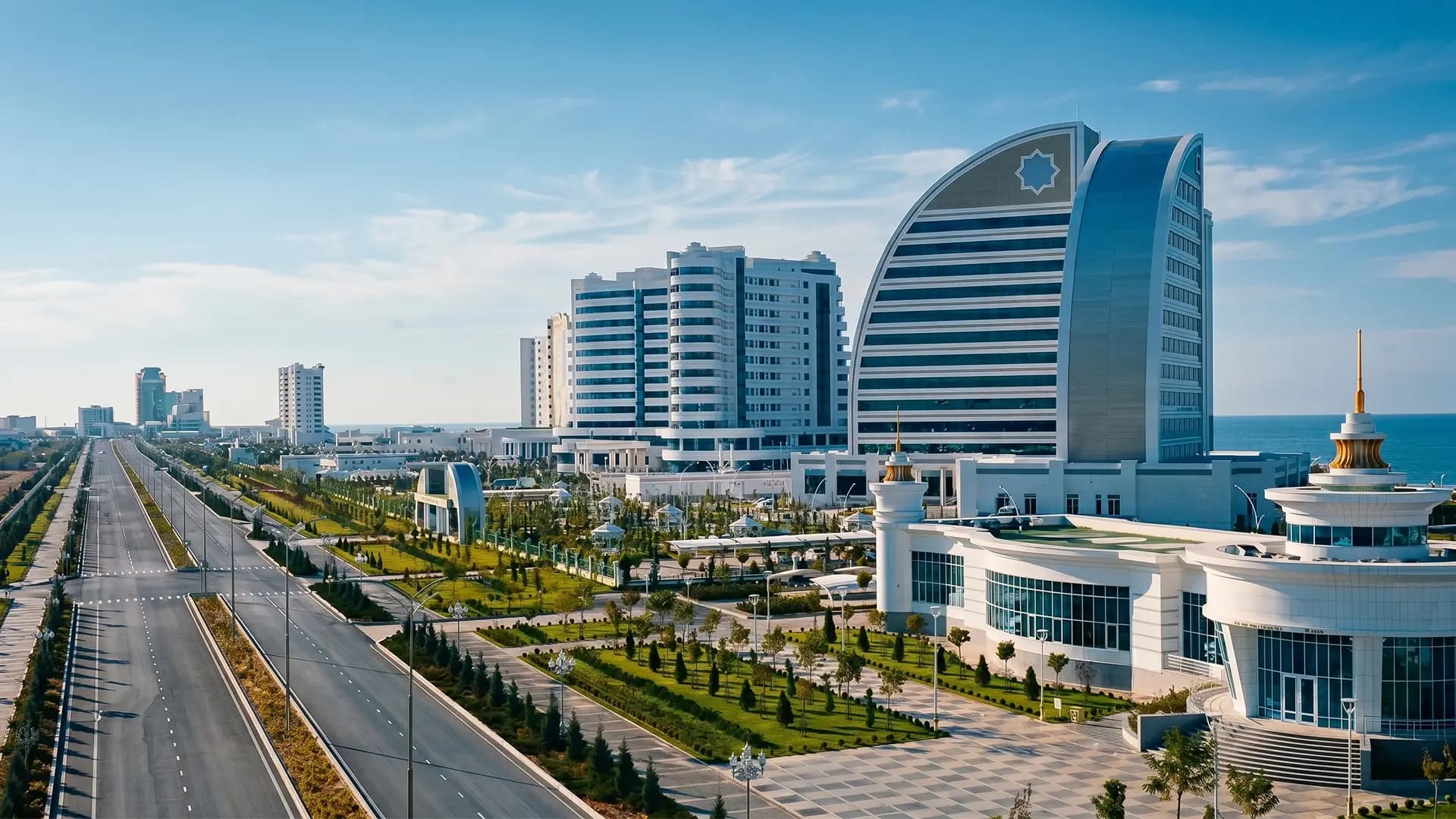
Caspian, Darvaza & Kunya Urgench: 4-Day Turkmenistan
$690–$1,500
per person
Continue Your Journey
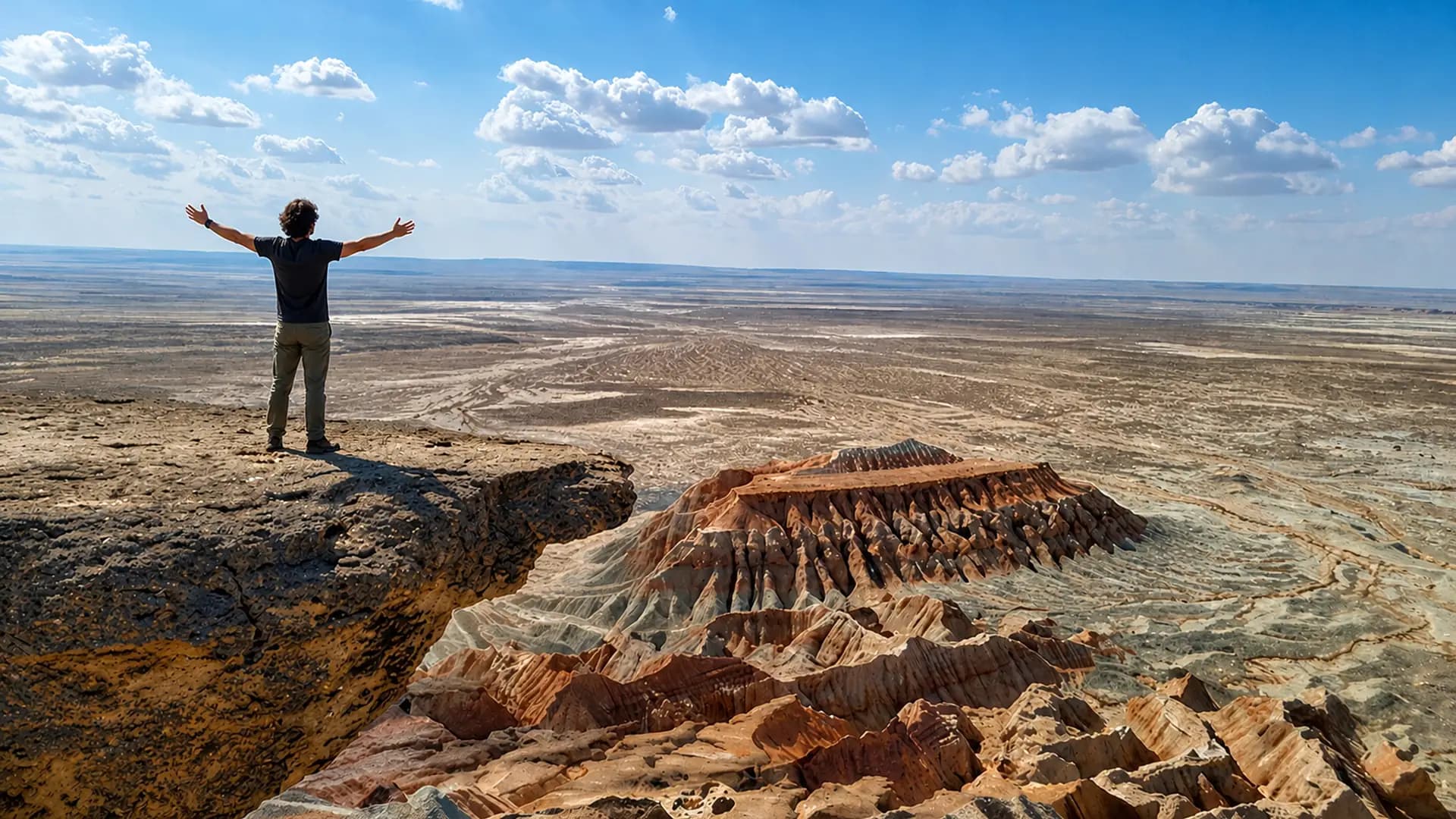
Yangykala Canyon
A remote canyon of flame-colored sedimentary cliffs rising from the Caspian lowlands, where striped rock walls glow crimson and coral at sunrise.
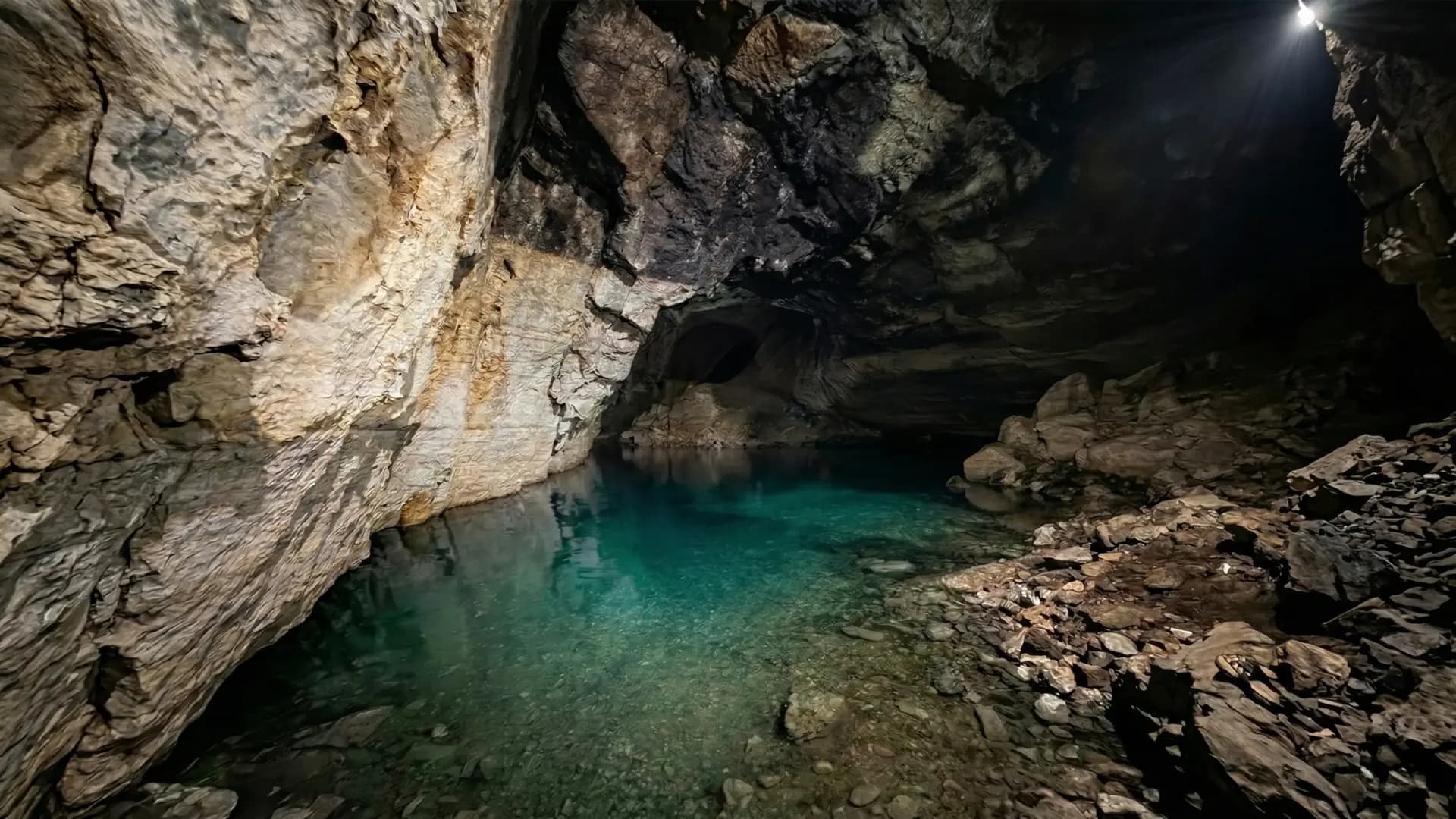
Kow-Ata Underground Lake
A vast thermal lake inside a sulfurous cave in the Kopet Dag mountains - warm, mineral-rich water you can swim in, deep beneath the earth.
Ancient Merv
One of the largest cities of the medieval world, Merv's vast UNESCO-listed ruins stretch across the Karakum sands where a Silk Road empire once peaked.
Quick Navigation
Plan Your Visit
Let our travel experts help you plan the perfect visit to this destination.
See tours10Inquire NowReady to Plan Your Journey?
Let our travel experts craft your perfect Turkmenistan adventure.
Chat with a Trip Expert